
Pyrenean Sheepdog Profile
Domestication of working dogs in the Pyrenees has produced some proper monsters. We’ve covered the adorable yet formidable Pyrenean Mastiff, with its 90 kg of soppy cuddle power, but while the mastiffs were security detail on the long and treacherous gauntlet to greener pastures, there was a smaller breed running navigation.
The Pyrenean Sheepdog represents a different class of Pyrenean working dog, this time smaller, sharper, and designed for crowd control.
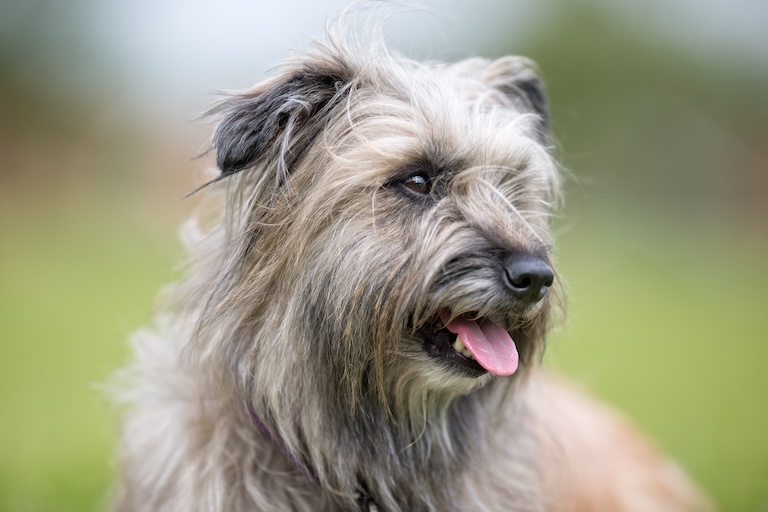
Pyrenean Sheepdog Facts Overview
| Habitat: | Domestic |
| Location: | Worldwide, but primarily around the French Pyrenees |
| Lifespan: | Up to around 19 years |
| Size: | Up to 53 cm (21 inches) at the shoulder |
| Weight: | Up to 13.6 kg (30 lb) |
| Colour: | Fawn, grey, blue, brindle or black |
| Diet: | Dog food |
| Predators: | None |
| Top Speed: | Quite fast and high energy, unspecified speed |
| No. of Species: | 1 species, two breeds |
| Conservation Status: | Not listed |
The Pyrenean sheepdog, Pyrenean Shepherd, or just “Pyr”, for short, is a bright eyed, sharp-witted bundle of intense energy that has thousands of years of selective breeding for a specific purpose behind it.
Their history as a working dog isn’t over, and while their kind and attentive nature has led to their increasing popularity as pets, they’re by no means an easy animal to keep, and have high demands for enrichment in and around the home.
Interesting Pyrenean Sheepdog Facts
[1] They’re ancient
This little shepherd dog breed has a long and mysterious history. Some believe that their ancestors were brought into the region by early Indo-European migrants, well over 4,000 years ago. From here, they were bred into various morphologies based on their different roles, and the Pyrenean sheepdog would have been selected for its high speed and intelligence as a working livestock herder.
This breed has been present in this region throughout written history, and we’ll come to why that is a little later, but its history is etched in various creations all throughout the medieval and early modern periods, including in the local Christian legends which claim that when the Virgin Mary appeared before young shepherdess Bernadette Soubirous at Lourdes in 1858, it was this exact breed of dog that was by her side. 1
[2] There are two of them
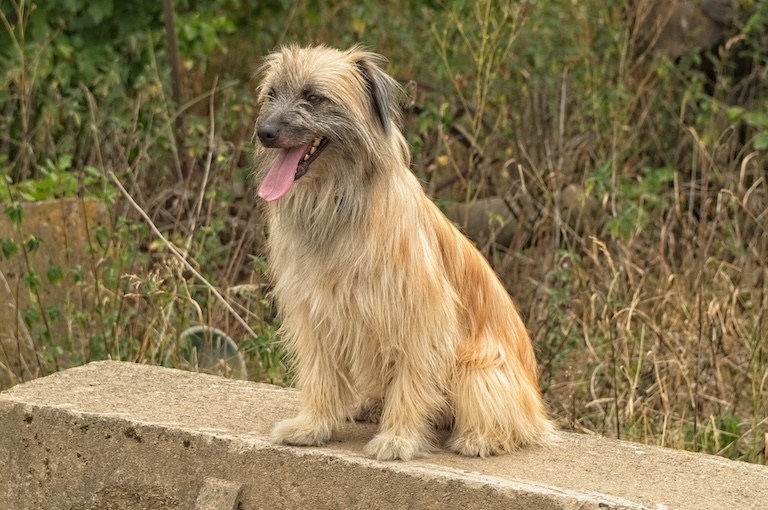
It wouldn’t be until 1926, though, that the central breed catalogue would officially recognise the Pyrenean Sheepdog. And now, they recognise two: the long-haired and the smooth-faced sheepdogs.
Despite the qualifier, the smooth-faced Pyrenean shepherd is still very fluffy, just not quite as outrageously shaggy as the long-haired.
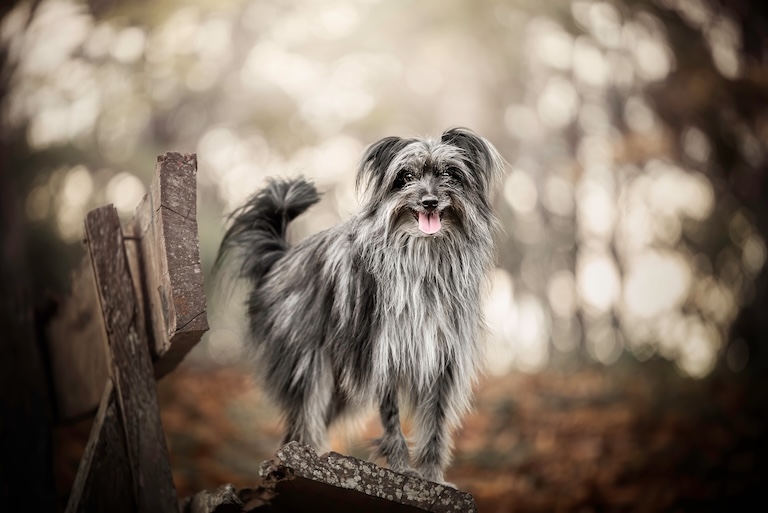
Both breeds come with a choice of paint jobs: fawn, grey, blue, brindle or black, are the official terms, and these translate to: grey-browns, grey, blue-grey, tiger-striped and black, respectively. But whichever colour you go with, the computational power is the same, and these are some sharp-witted dogs!
[3] They’re smart
Whoever you talk to about this breed will tell you one thing very consistently: this is a very intelligent dog. They are working dogs by nature, but specifically dogs who were bred to be attentive and learn to communicate with their shepherds, and this has resulted in a bold, confident, and worryingly smart creature and all the perks and troubles these characteristics bring with them.
Like border collies, these are some of the smartest dogs around, despite coming in relatively small packages. 2
[4] They’re small
This is considered a small to medium-sized breed of dog, and is usually no taller than 50 cm at the shoulder, sometimes as small as 38 cm.
They wear this very well, and bring with them tremendous amounts of energy and power, able to cover 30 km in a day with ease, and maintain a high pace of work for a long time without tiring.
They also have fast reaction times and plenty of energy, which makes them a perfect fit for their job description.
[5] They used to herd sheep
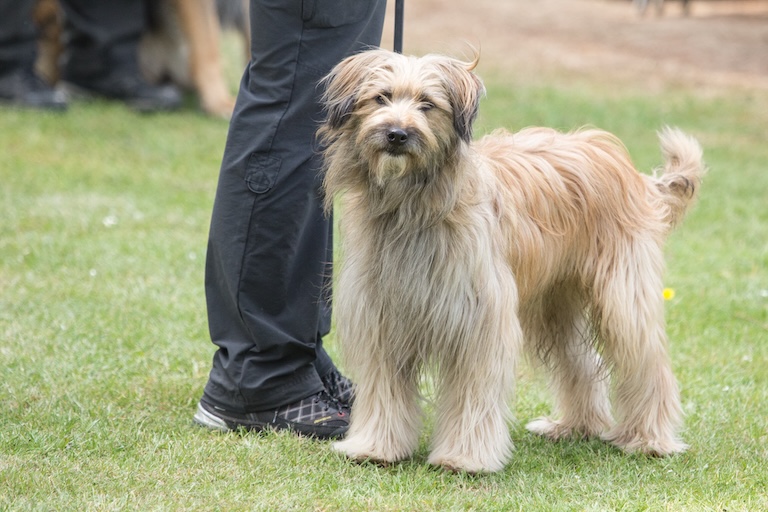
As mentioned, these are shepherd dogs, but their role goes a little deeper than this. Their herding tasks contributed to a form of nomadic herding lifestyles in the Pyrenean mountains.
In conjunction with the enormous protectors of the flock – the Pyrenean Mastiffs – the shepherds guided and corralled their animals on long, seasonal migrations between grazing sites. This was more than just a shepherding day job, this was a way of maintaining an ancient way of life for the native human populations, and this is why the breed has sustained for thousands of years, relatively unchanged.
The high altitudes of their workplaces contributed to their boundless energy, and the rugged and vast terrain carved out their robustness as working dogs, and while their roles have reduced as the world has modernised, this is a job that still has a strong market for shepherd dogs. 3
[6] They still do, too
Even in modern times, this practice of seasonal migrations continues. Shepherds and their masters engage in grinding, 4-month journeys in which they transport and then protect their livestock and protect them from illness, disease, and wolves.
The land itself is an asset to the farmer, who is responsible for keeping it healthy for future seasons, and this is done through a strategic rotation of grazing herds, all guided and assisted by the Pyrenean shepherd.
So, these are more than just an old working dog breed, they’re a modern one, too. And in fact, they’re probably a lot happier in this setting than they are as pets, in the majority of cases.
[7] They’re not beginner dogs
You’d think a breed this smart and easy to train would make a great intro breed to dog ownership for the household, but a lot of what makes this dog so special also makes it high maintenance.
While very trainable, this intelligent and fast animal requires a lot of stimulation and has a powerful prey drive, so may be prone to bolting after small (or even large) animals and deploying the kind of intellectual stubbornness that is associated with shepherds when it comes to getting them under control.
All dogs need stimulation, but shepherds have notoriously high standards for it, and need to be well worked out in order to keep them mentally healthy. Being so smart, they require daily challenges and experiences to prevent them from expressing boredom and becoming a handful.
So, while they are said to be good with both children and other pets, the caveat is that they must be able to express their drives regularly and often, and for many with busy or inactive lifestyles this is too much responsibility. And to top it all off, the longer-haired varieties require attentive grooming! 4
Pyrenean Sheepdog Fact-File Summary
Scientific Classification
| Kingdom | Animalia |
| Phylum | Chordata |
| Class | Mammalia |
| Order | Carnivora |
| Family | Canidae |
| Genus | Canis |
| Species | lupus |
Fact Sources & References
- Patricia Princehouse, “History of the Pyrenean Shepherd”, Pyrenean Shepherd Club of America.
- , “Long Haired Pyrenean Sheepdog Breed Guide”, Scrumbles.
- (2025), “The Pyrenean Shepherd”, Modern Dog.
- (2026), “Pyrenean Sheepdog Dogs Breed”, Pets4Homes.