
Pyrenean Mastiff Profile
Long time ago, man fight wolf. Then, man tame wolf. Then, man make wolf into dog. Then, man make dog into fashion accessory-but before that man make dog into wolf again. This time bigger, shaggier and with a cute, sloppy face.
Now wolf fight wolf.
The Pyrenean Mastiff is one of the largest selectively-bred domestic wolves in existence, and its role as a protector of human livestock against its wild ancestors is a testament to the genetic humiliation our species has inflicted upon wolf kind.
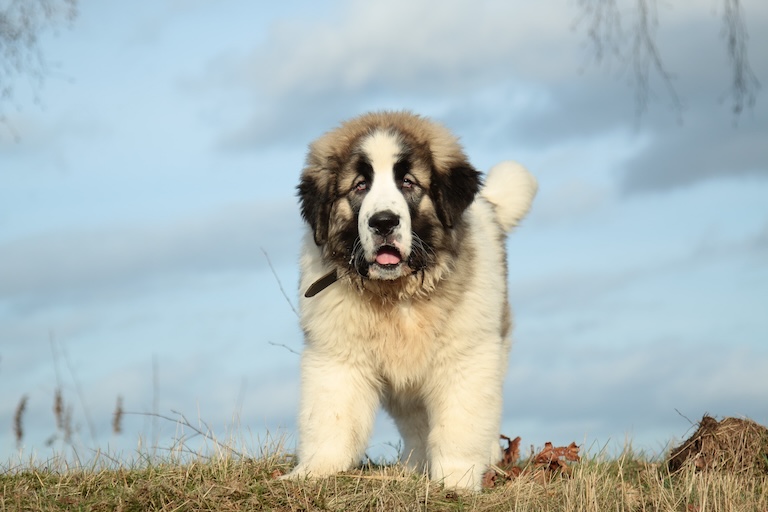
Pyrenean Mastiff Facts Overview
| Habitat: | Domestic, working dogs in the Pyrenees |
| Location: | Worldwide |
| Lifespan: | Usually 8–10 years, up to 15 years |
| Size: | 77 cm (30 in) at the shoulder |
| Weight: | Up to 90 kg (200 lb) |
| Colour: | White or cream base with brown, black, or grey patches |
| Diet: | Kibble, wolf faces |
| Predators: | None |
| Top Speed: | Not recorded |
| No. of Species: | 1 |
| Conservation Status: | Not Listed |
The Pyrenean mastiff is a dog-lover’s dog. This is a smart, loyal and gentle giant with a protective nature and the kind of derpy, saggy face you can grip in both hands and make baby noises into.
But it comes from a long line of dogs bred to kill, and it does so – albeit primarily in self-defence – with alarming efficacy. This is a very good boy, by all accounts, but a big boy, too, and that’s something that shouldn’t be taken lightly.
Interesting Pyrenean Mastiff Facts
1. They’re Molossoid
We humans got exceptionally lucky with dogs, in that we were able to compensate for all of our physical shortcomings by breeding them into a beast that just so happens to provide us with unconditional love. This is, essentially, demonic possession at the DNA level, and we have yet to exhibit an appropriate amount of gratitude for it!
The Ancient Greeks bred a mastiff-like dog called the Molossian hound, and this was a sort of rottweiler or mastiff type deal with short hair that the Romans appropriated and took into battle.
The legendary Molossus was a guardian dog of the Molossians, who were said to have descended from Achilles. While the Molossians were real people, Achilles probably wasn’t, so there’s overlap in the status of this dog as both a real animal and a mythical one.
But the real part of their history led to a lot of the real breeds we have around today. The aforementioned Rotties and mastiffs, as well as Great Danes and Boxers are said to have come from Molossian hounds. 1
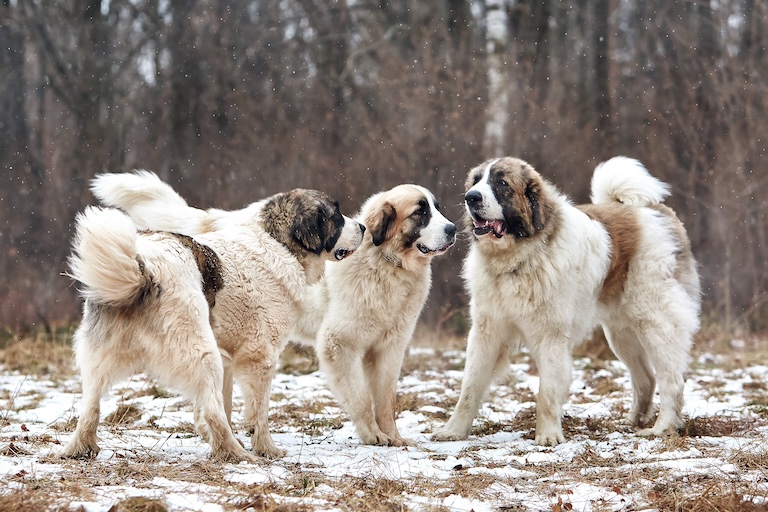
2. They’re wolf killers
Our species went through a range of social archetypes before it settled on the relentless drudgery of modern office life. One way of life was, and still is, transhumance. This is a subcategory of nomadic lifestyles, in which a bud of herders take livestock away from the base population to graze on greener pastures for a season.
This is what’s still practiced in much of Eastern Europe and Western Asia, and what was traditionally practiced in and around Spain when the Pyrenean Mastiff was invented. This breed was designed to be a guardian of livestock, particularly as their herds were led to the seasonal pastures and back again.
There are several breeds with similar histories and names, such as the Pyrenean Shepherd and Pyrenean Mastiff Mountain Dog, but these are considered distinct breeds.
Ultimately, though, Pyrenean Mastiff dogs trace their origins to a population of brutish Mollosoids from Spain, and have endured because of their ability to be both soppy balls of fluff, and enormous murderers at the same time.
3. They’re huge
As guardians, Pyrenean mastiffs are bred to care and protect, so they are soft, loyal and loving animals. But since they were bred to protect against bears and wolves, they’re also giants.
This breed is one of the most powerful in the world, and stands over ¾ of a metre tall, weighing between 60 and 90 kg. That’s more than the average Pyrenean human, and about two or three times the weight of the average Pyrenean wolf.
To make their lives easier, they donned a metal spiked collar, which makes biting the throat of this dog a self-sabotaging act for any attacking wolf.
Unfortunately, as one of the largest dog breeds ever, they are prone to many of the health issues that large dogs typically face.
4. They often die of cancer
One study into the mortality of this breed showed that cancer was the most common cause of death for all individuals – claiming around half. This was followed by “old age”, cardiac problems, and bloat, in much smaller figures. Dogs that died of cancer did so below the age of 8, which isn’t unusual for a breed of this size, but what is unusual is how much better they can fare with a mix of genetic luck and good maintenance. 2
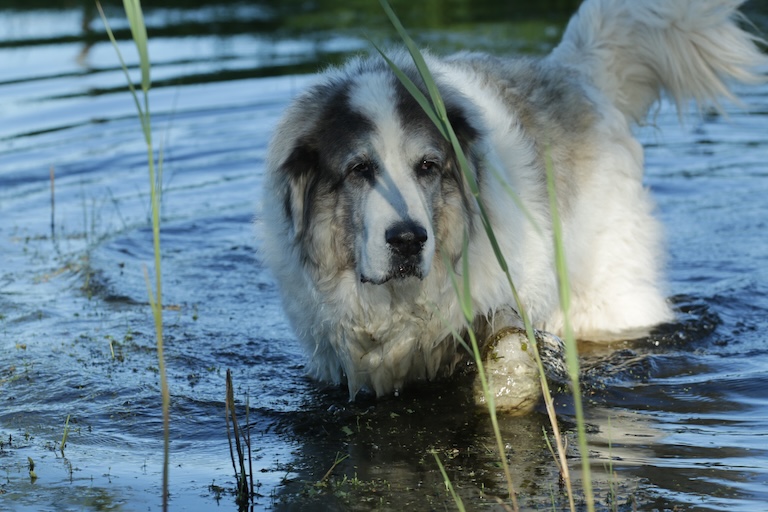
5. They can live a surprisingly long time
Owners of the Pyrenean mastiffs claim that they can often live for as long as 15 years, which is far longer than most dogs of 35 kg and above, let alone 60 kg or more.
It seems that there are ways to ensure the genetic health of this breed to a greater degree than some purebreds, and combined with regular checkups and good diet and exercise, this can factor into their long lives.
6. They make good pets (with some caveats)
Many people will make the argument that “It’s not the breed, it’s the owner”, when discussing dangerous dogs, but this is really only half right. Bad owners make bad dogs, yes, but a bad pocket terrier can be safely booted over a fence if it hurls itself at you – a bad pitbull can take a bullet and still keep attacking. So, a bad mastiff would be closer to a rampaging bear.
However, this breed is said to be remarkably gentle in most contexts and not naturally aggressive. As such, they are popular and relatively uncomplicated as pets, but the sheer size and force of such a dog requires a powerful and disciplined owner to ensure their safety. They also eat a lot!
So, while this wouldn’t be an easy breed to take on a lead if they didn’t want to be taken, their gentle nature and intelligence do point to the Pyrenean mastiff making an outstanding family companion, as long as the resources are there to keep them healthy and happy. 3 4
Pyrenean Mastiff Fact-File Summary
Scientific Classification
| Kingdom | Animalia |
| Phylum | Chordata |
| Class | Mammalia |
| Order | Carnivora |
| Family | Canidae |
| Genus | Canis |
| Species | lupus |
Fact Sources & References
- , “Molossian dog ”, Albanian Studies.
- Bell (2021), “Mastiff breed mortality: A study of owner experience, dog age and longevity”, National Library of Science.
- , “Pyrenean Mastiff”, Wisdom Panel.
- , “Pyrenean Mastiff Breed Guide”, Scrumbles.