
Polecat Profile
Any day is a good day when we get to talk about weasels. Stink weasels, to be precise. This small cluster of the greatest mammalian family on the planet is a fine representation of what makes Mustelids so fun.
Polecats are large, smelly, cuddly weasels with all the bite force and bloodlust their family is known for. And today is a good day because we get to talk about all of this, and more. What day is it? It’s Mustelidae.

Polecat Facts Overview
| Habitat: | Varied: woods, farms and villages, wooded steppe, sand dunes, marshes and river valleys, agricultural land, forest edge and mosaic habitats |
| Location: | Eurasia |
| Lifespan: | Up to 15 years in captivity, likely around 5 in the wild |
| Size: | Up to 56 cm (22 in) long |
| Weight: | Up to 1.5 kg (53 oz) |
| Colour: | Usually a musky brown with a black mask |
| Diet: | Insects, mammals, eggs, fruit, amphibians |
| Predators: | Raptors, badgers, wolves |
| Top Speed: | Nimble and capable of bursts of high speed |
| No. of Species: | 4 |
| Conservation Status: | Most polecats are listed as Least Concern, the American polecat as Endangered |
Polecats are large, solitary, predatory mustelids within the weasel genus. They’re so notorious, there are several other, unrelated animals named after them, but the four true polecats deserve a mention of their own for being some of the most resilient (and stinky) of all the mesopredators. There are some exceptions, and at least one species is in serious trouble as a result of intensification of farming practices in the US. But over in Eurasia, the stink weasels thrive, and with just a little help, they will be here to stay.
Interesting Polecat Facts
1. The true polecats
“Polecat” is a common name handed to several animals, some more related than others. In some regions of the US, it’s offered to the skunk, which isn’t in the same family as the so-called “striped polecat” in the same country.
The name is given mostly on account of a resemblance to the OG polecat, also known as the “European” polecat, but all other polecats are just imitating.
In its defence, the striped polecat is a fairly close relative, and is commonly known as the Zorilla, so we’ve covered them already. In Eurasia, there are several other contenders, including the Marbled polecat, a very obscure and pretty mustelid in the Vormela genus. This, being in a different genus, isn’t a true polecat, either, and the polecat title is reserved strictly for a subgenus of Mustela, known as Putorius.
There are four recognised species here (with a caveat), which are the American polecat, sometimes also called the black-footed ferret; the European polecat, the Steppe polecat and the domestic ferret.
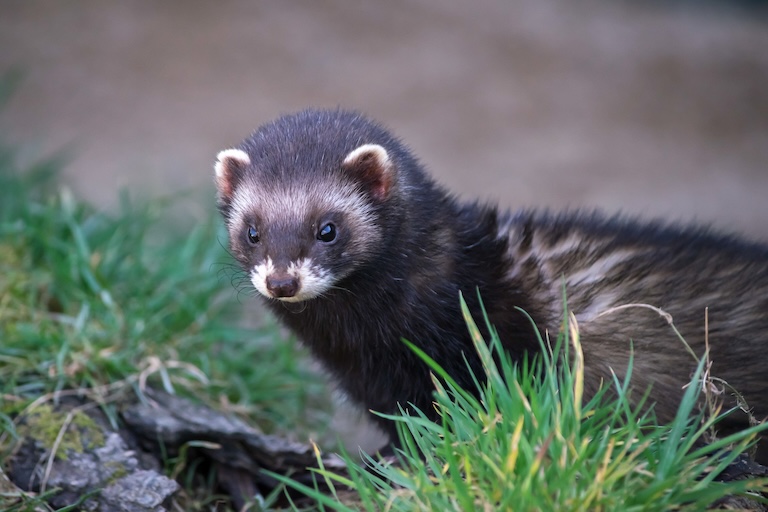
2. They’re ancestral to ferrets
It’s thought that the European polecat is the species that’s ancestral to the domestic ferret, and that the latter has diverged enough to be considered a separate species by some, although it could also be considered a subspecies.
Ferrets are known for being playful, soft, cute and make great pets, but much like the playful domestic kitten, ferrets are, at the fundamental level, killers.
All of the qualities that make ferrets fun to be around are more or less shared across the Mustelid family and these include the ability to kill very quickly, very quietly, and animals you’d think were too big for a mere weasel to tackle.
But that’s the Mustelid way. They are immensely powerful and agile animals, with honey badger energy. So, it’s no surprise that honey badgers, too, are mustelids!
3. They’re stink weasels
Mustelids are one of the most under-rated groups of natural born killers that exists on the planet, and they’re most commonly known for either otters or weasels.
Weasels are generally tiny, brutal and intelligent animals in the Mustela genus, popular for that famous photo of one riding on the back of a Green woodpecker. But, as we mentioned, polecats are members of this genus, too!
And they’re big! While weasels get as small as the 26 cm, 250 g least weasel, polecats can top 2 kg and grow to over half a metre in length. This is some serious force, which for the polecat is often imparted upon birds, large rodents and amphibians. So, not quite as epic as the wolverine’s reindeer battles or the weasel’s aerial acrobatics, but they do alright.
The subgenus name, Putorius, comes from the same root as the word putrid, and this is a nod to another common trait in mustelids: the anal glands.
Polecats, like several other species in the family, can release a pretty nasty smell from their back ends, which makes them quite unsavoury to eat. Owners of ferrets know this well, and many have their anal glands surgically removed, but this is considered not only unnecessary but cruel, and there are plenty of ways to reduce the risk of the stink without resorting to such drastic measures.
Ultimately, if you don’t want to risk the stink weasel, don’t be around polecats. And many predators take this advice – the polecat has few natural enemies other than raptors and some very bold foxes.
4. They’re widespread
Despite mislabelling the zorro as a polecat, North America does have its own species of true polecat, as we mentioned. The black-footed ferret is a very sweet-looking little killer, which is quite a lot smaller than its European cousin.
This little, mink-sized polecat is also known as the Prairie Dog Hunter, because over 90% of its diet is made up of prairie dogs.
This terrifying predator raids the ground squirrels’ burrows while they sleep, killing and eating them at will. Unfortunately, the war against prairie dogs has caused the species tremendous damage and the American polecat is the most threatened of the true polecats, currently sitting at Endangered on the IUCN’s Red List. 1
5. They’re remarkably versatile.
Others are doing much better, and the European polecat owes its success to a far more flexible approach to life.
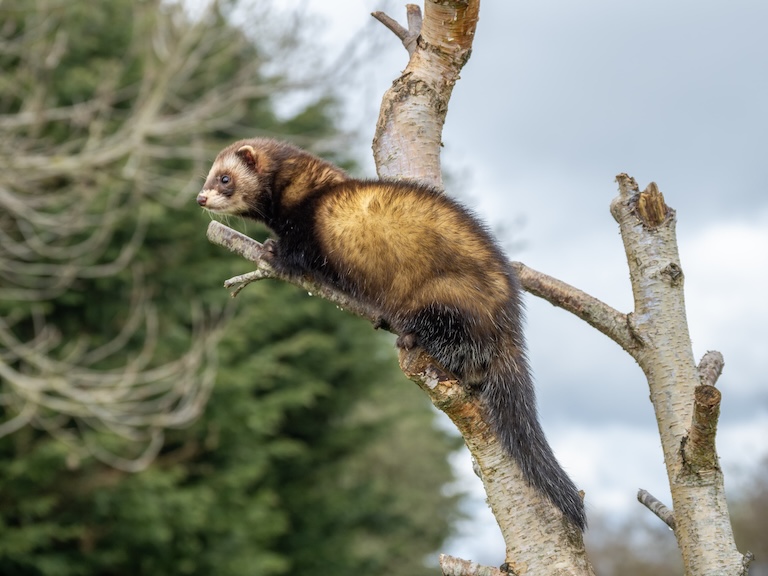
It is found in a very wide range of habitats, from lowland forest to farms, villages, sand dunes, marshes and beyond. This species eats more or less anything, and is particularly keen on waterside habitats where it can catch amphibians with ease.
This polecat also hunts rabbits and hares, which are larger than it is, but being a mustelid, this is of no concern to the polecat.
It’ll even eat carrion, making it one of the most versatile of all mustelid species, and so it’s not a surprise that it can be found all across Europe and into Asia. 2
6. They’re under attack
Like the American polecat, though, all other species are at risk to some degree. The loss of all habitats is affecting the European polecat and the destruction of wetlands and hedgerows is particularly responsible.
In Britain, hunting of polecats led to their near extinction but they are making a comeback in the presence of stronger restrictions and changes in attitudes. On the other hand, increasing traffic on the Isles makes road mortality an ever-growing threat to the species. 3
7. But they’re resilient.
With the exception of the American polecat, these are generally very flexible animals, both physically and behaviourally, and this provides a degree of resilience to change that specialists don’t have.
With any luck, conservation efforts across the range of mustelids like these will prove to be ripe for their recovery, as we are seeing in small, localised populations already. Polecats are tough, smart, and hardy animals who could bite your face right off, so it’s quite lucky for us that they don’t want to.
Polecat Fact-File Summary
Scientific Classification
| Kingdom | Animalia |
| Phylum | Chordata |
| Class | Mammalia |
| Order | Carnivora |
| Family | Mustelidae |
| Genus | Mustela |
| Species | putorius |
Fact Sources & References
- Belant et al (2015), “Black-footed Ferret”,IUCN RedList.
- Skumatov et al (2016), “Western Polecat”,IUCN RedList.
- Skumatov et al (2016), “Western Polecat”, IUCN RedList.