
Robin Profile
1400s England was a time of frilly collars, high-pitched harpsichord music, and those ridiculous cone-shaped hats that princesses wore (called hennin). It was a time of roses and wars and the origin of English Exceptionalism. And it was a pivotal moment for the naming scheme of several small Passerines because it was in the 1400s that the English picked up a habit of giving human names to songbirds.
This is how the redbreast became Robin redbreast, and with the subsequent gallivanting that the British would infamously enjoy, it’s how that name spread to unrelated birds all over the commonwealth and beyond.
Robin Facts Overview
| Habitat: | Varied, mostly |
| Location: | Worldwide |
| Lifespan: | Usually around 5 years, some up to 19 years |
| Size: | Up to 25 cm (10 in) long, usually smaller |
| Weight: | Eurasian robin is 21 g, American robin 77g (2.7 oz) |
| Colour: | Varied, usually with a red or orange breast, but not always |
| Diet: | Mostly insects, some seeds |
| Predators: | Cats, snakes, raptors |
| Top Speed: | Possibly up to 56 km/h (35 mph) |
| No. of Species: | Tens, possibly 100+ |
| Conservation Status: | Most are Least Concern, some Endangered |
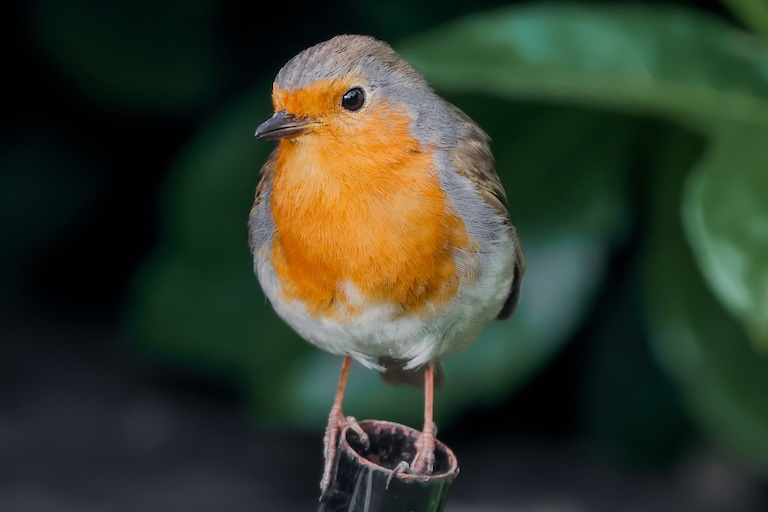
Robins are well known as Christianity’s avian mascot, at least in the UK. These are proud natives of the British Isles, and far too patriotic to leave during the winter, but that’s not the extent of robin kind. This species is found all over Europe, and as it turns out, it’s just one of many, many species of bird – mostly unrelated to one another – that have been gifted the name Robin.
Interesting Robin Facts
[1] There’s one original
The pomp-and-princesses period of English history is certainly over-represented on account of the elites being the only people who could write anything down. In reality, the Middle Ages were a time of immense hardship and plague for the vast majority, while the rich lived in castles and baked four and twenty blackbirds into a pie.
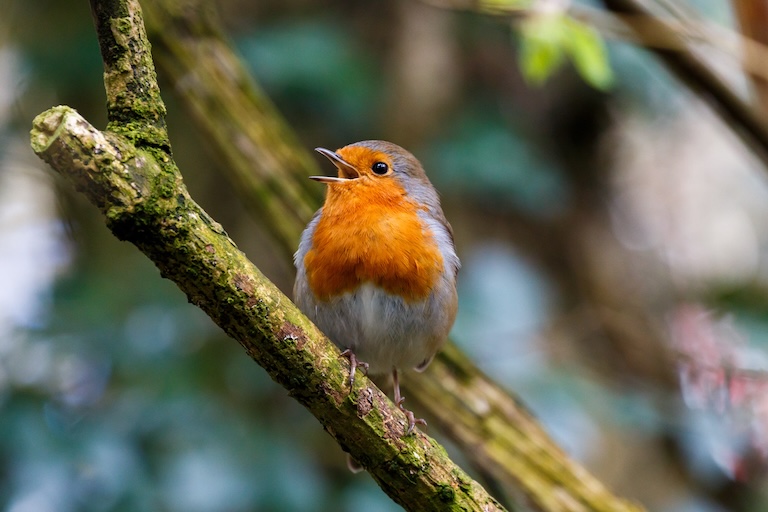
They seemed to have a thing for birds, and as we mentioned in the intro, this was the time when birds would receive human names. Robin was the name given to Britain’s resident flycatcher, the redbreast. This is a small, bold bird that hangs tight while most other species flee the country to avoid the winter. As such, it’s a staple on Christmas cards and other Winter festival imagery.
This is the original robin, and while it’s a staple of British culture, it’s also found over much of Europe. But in the wake of a reckless and out-of-control naming epidemic, the qualifier is now “European” robin. Because now, there are too many robins to count, and they aren’t generally very related at all.
[2] Most are flycatchers
The European robin is a member of the Old-World flycatchers. These are small insectivores, known for doing pretty dances, being rather nimble, and catching insects out of the air. And there are many such flycatchers in the Chat subfamily with similarly rosy breasts.
So, it’s hardly surprising that this is where most of the so-called “robins” are found. There are 64 species of Old World Flycatcher listed under the name Robin on IUCN, dotted across over ten genera. Interestingly, the European robin is the only one in its genus, Erithacus, which highlights how the name scheme relates very little to the phylogenetic relationships between the species.
And they’re not all flycatchers, either. Some are thrushes.
[3] Some are Turdus
The thrush family is one of the most unfortunate-named. Thrush alone is a pretty unpleasant thing to be named after, but the genus name, Turdus, isn’t any better.
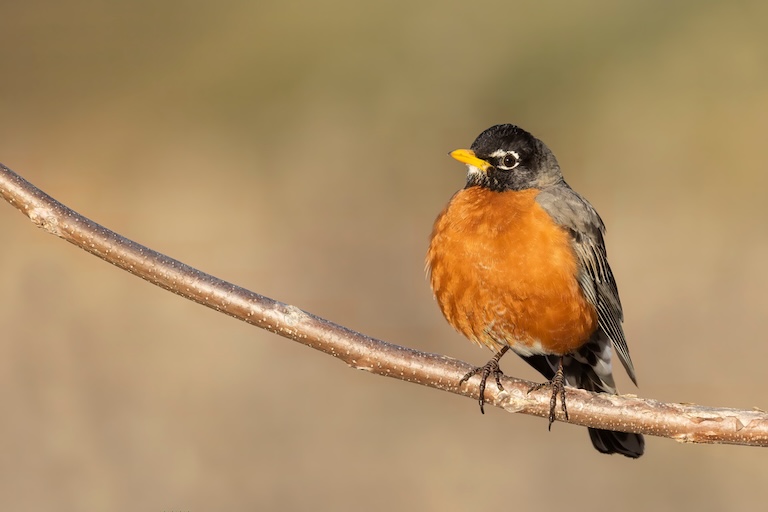
Yet, these birds are some of the prettiest singers in the Passerines. In the US, the far larger American Robin is a member of the thrush genus. As is the San Lucas Robin, and around four or five other birds commonly called robins. These are Passerines, too, but not closely related to the flycatchers at all and very different-looking.
It’s understandable that the name would make it to the Americas with the European colonisers, but the extent to which it has spread is really quite a reflection of how deep British culture got into the nooks and crannies of the planet.
[4] They’re not all red
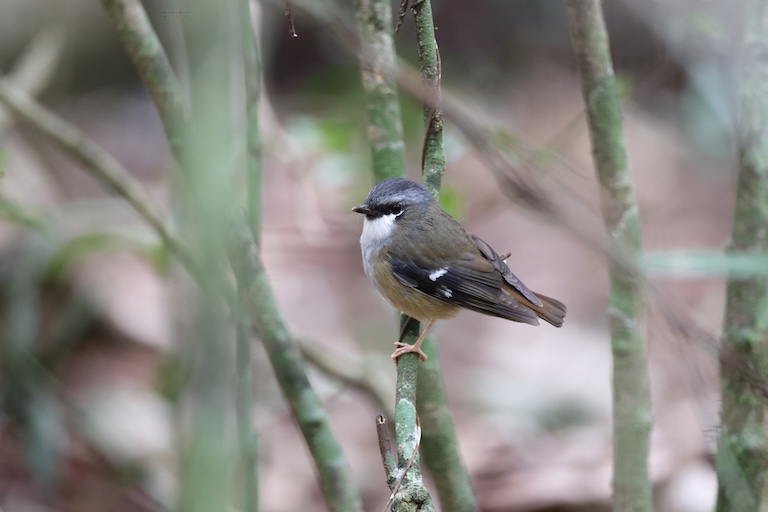
Robins are typically at least somewhat similar to our OG in Europe: small insect-feeders with a red breast. But this isn’t strictly necessary, and some have been given the name with very little else in common.
The wonderfully-named Bagobo babbler from the Philippines is also known as the Bagobo robin, and has a blue-grey head with brown wings and a long tail. It’s a flycatcher, like the European robin, but is a lot longer and a totally different colour. Some do have hunts of rusty red on the front, but other robins don’t have any at all.
The Ashy robin is from New Guinea, and is almost totally grey. Then, there’s the black robin, which also works as a corrupted sidekick of a Marvel superhero and is covered only in black feathers.
Robins are found all over the place and come in various shapes, colours and sizes. They’ve even made it to the opposite end of the Earth. 1 2
[5] There is even an Australian one
In Australasia, there’s more than one genus of robin that makes up a whole family called Petroicidae. The pink robin is a great representative of robin kind, sitting very small and fat in Southwestern Australia. This is a black bird with a purple-pinkish chest that makes it look a bit like a boiled sweet.
This family of robins isn’t related to either the American or the European robins, and is simply another casualty of the British lack of imagination when it comes to naming birds.
[6] The Norfolk Robin
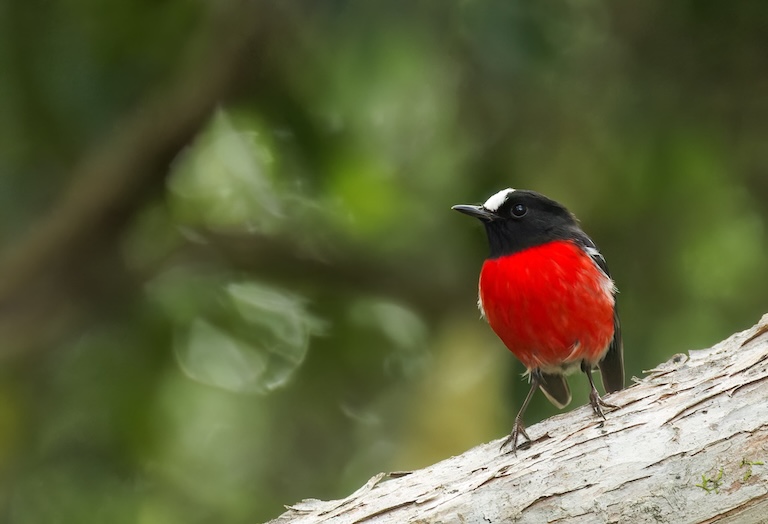
Speaking of repetition, the Norfolk robin is another member of the Australian robin family, whose home is not the flat and barren hellscape of East Anglia but a tiny island way off the coast of Australia named after it.
Its name, Petroica multicolour, is quite cute, but its neighbour, the scarlet robin, one-ups it with the name Petroica boodang. Little boodang is doing quite well for itself, but unfortunately, the Norfolk robin isn’t. It’s listed as Endangered on the IUCN, as are a few other species.
But the good news is that the original Redbreast is positively thriving. 3 4
[7] The original Robin is on the rise
The European robin is not only of Least Concern; it’s on the rise. It’s one of the few species benefiting from the increasing temperatures brought about by climate change. In the UK, it’s risen by 50% since the ‘70s, and since the Isles no longer get any real winters, far more of their young are surviving the first year. 5
Robin Fact-File Summary
Scientific Classification
| Kingdom | Animalia |
| Phylum | Chordata |
| Class | Aves |
| Oder | Passeriformes |
Fact Sources & References
- , “Black Robin”, DataZone by BirdLife.
- (2025), “Ashy robin”, Wikipedia.
- (2025), “Norfolk robin”, Wikipedia.
- (2023), “Norfolk Island Robin”, IUCN Red List.
- Hannah Jones , “Robin (Erithacus rubecula)”, Natural History Museum.