
River Otter Profile
Any opportunity to enthuse about mustelids must be exploited, and otters are particularly enthuse-worthy examples! Otters are so successful as animals that they have to be grouped as an entire subfamily of mustelids, comprising 14 or more species, spread out all over Africa, Eurasia and North America. And the river otter is the name given to a variety of species outside of Africa.
The river otter is one of the largest mustelids, but it’s not a single species – in fact, it’s not even a single genus. River otters hold the torch for semi-aquatic mustelids in freshwater systems in both Eurasia and the Americas
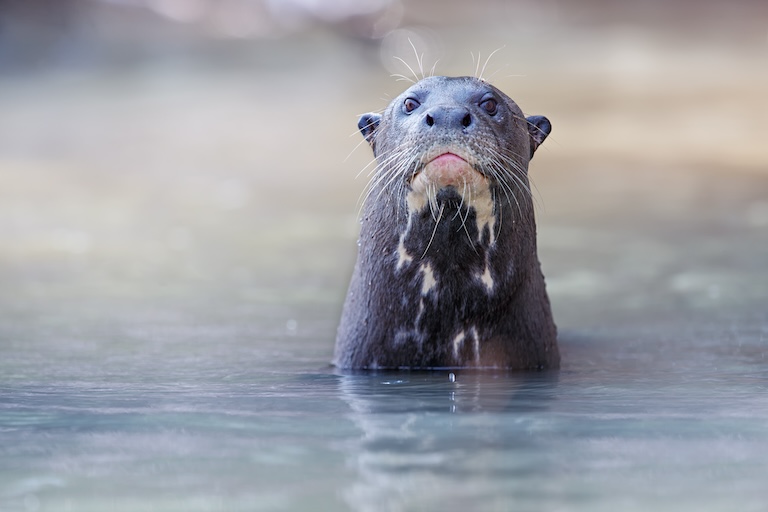
River Otter Facts Overview
| Habitat: | Semi-squatic, island waterways, coastlines, rivers, lakes |
| Location: | North America, South America, Eurasia, |
| Lifespan: | 21 years in captivity |
| Size: | Up to 1.7 metres (5 ft 7 in) long |
| Weight: | Up to 14 kg (30.84 lb) |
| Colour: | Dark brown, lighter underneath |
| Diet: | Shellfish, crustaceans, fish, birds, mammals, amphibians, eggs; leaves, roots, tubers. |
| Predators: | Foxes, bobcats, coyotes, raptors, alligators, and probably cougars alligators |
| Top Speed: | Around 13 km/h in the water, up to 23 km/h on land |
| No. of Species: | 1 |
| Conservation Status: | From Least Concern to Endangered |
Interesting River Otter Facts
River otters embody the classic mustelid traits of cuteness, intelligence, playfulness and an absolute penchant for murder. They are some of the largest to do it, too, which means we should be thankful that we are just about big enough to appreciate them in safety.
Otters are the wolverines of the water, and while the oceans belong to the sea otters, the freshwaters are dominated by the river otters.
[1] They’re big
There are quite a few otters to choose from, and quite a few river otters, at that. The smallest otter in general is the Asian small-clawed otter, who isn’t a river otter, but does all the same stuff, only at a demure scale of around a metre long.
So, with this as a benchmark, it’s fun to point out that the largest river otter is the aptly-named Giant river otter, whose large mass reached up to 32 kg, and can be up to 1.7 metres long. This is a tremendous size for a mustelid, and one of the heaviest, though the chunkier sea otters might just nudge them out of contention for top spot.
There are five river otter species in total: the aforementioned Giant, the Eurasian, the Southern, the Northern and the Neotropical. All of them are sleek, fast, adorable and really quite big. And to top it all off, they have the brains to match.
[2] They’re smart
Otters, like all mustelids, are surprisingly intelligent. Captive animals become tame very quickly, but they are never truly domesticated, nor are they ever going to be anything but mustelids, so it’s not a good idea to take too many chances with them.
Otters play fetch, use tools, and do various other things we immediately recognise as smart.
They are also adaptable to various environments, and while they’re primarily semi-aquatic, they are far more competent on land than, say, a beaver is. They’re even capable of climbing trees!
These all-terrain animals outsmart, outpace and outmatch beavers in many other regards, and killing is, of course, one of them.
[3] They’re killers
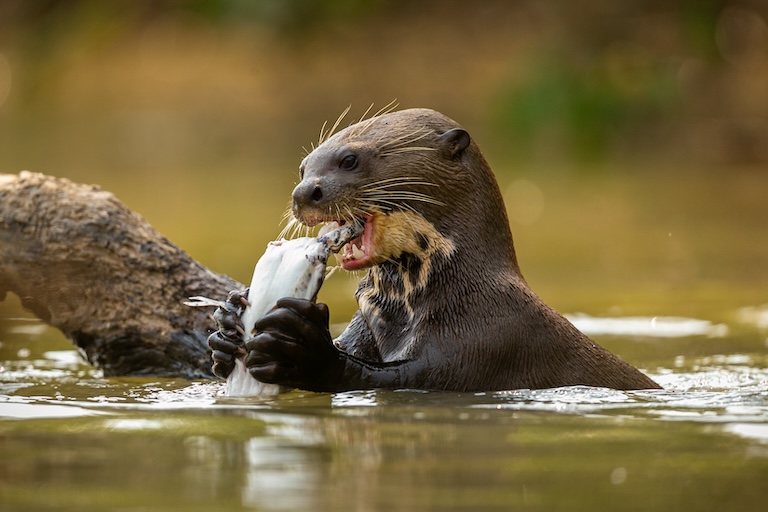
River otters, like all otters, are generalist feeders, but will mostly eat other animals. They take a bit of salad with their steak, but for the most part, these are well-honed tools of death. Otters aren’t fussy eaters by any definition, and will go with whatever’s easiest. This could be a crab, a clam, a bird’s egg, or the bird who laid it.
Otters have tremendous bite forces which allow them to crush shells and lop off the fingers of the late, great Terry Nutkins. Being exceptional in the water means they can also catch fish, and it’s not uncommon to hear a river otter crunching into a catch on the bank before you see it.
Sometimes they do this together, but for the most part, they prefer to hunt alone.
[4] But they’re mostly solitary
If it weren’t for their solitary nature, it’s possible that mustelids would have taken over the world by now. During the so-called “Cat Gap” in North America, they took over niches previously filled by lions and sabretooth tigers, growing to terrifying proportions with specimens like the 100 kg Megalictis.
But, if these prehistoric versions were anything like their contemporary counterparts, they likely weren’t as organised as the canids and felids would become, and couldn’t compete. So, mustelids are relegated to the mid-tier, mesopredatory niches, where they sneak about with incredible agility and power, keeping the smaller prey animals in check.
But they’re not all loners. While the vast majority of mustelids are solitary, and most otters, as well, the Giant river otters and the North American river otters are often seen enjoying the company of their kinfolk. In classic mustelid tradition, they reject even their own rules, and so there’s still a chance for them at the top, once we finish wiping out all the wolves and bears.
Giant river otters, the whopping, 1.7m long examples, form groups of up to 20, and they appear to be loyal and strongly bonded, rather than just loosely hanging out.
[5] They’re widespread
It’s perhaps this flexibility that has made otters some of the most successful of their family. The giant otter is in its own genus, Pteronura, while the Eurasian river otter is in Lutra, and the American river otters are in Lontra. That’s three genera already, and their ranges are impressive.
The Eurasian river otter spans from the Westernmost coasts of Europe, touches on North Africa, and then is plastered eastward across all of central Russia into China, even down as far as Indonesia. The North American river otter spans from Florida to Alaska, including almost all of Canada. The Giant River otter’s range covers most of the top half of South America, and the Neotropical river otter fills out even more. Finally, the southern River otter covers most of Patagonia.
So, three continents are more or less plastered with river otters, and this isn’t even close to their full potential.
[6] There used to be more
We’ll talk about the dwindling number of some of these species in a moment, but first, there’s one species that deserves a mention on account of it no longer being around to speak up for itself.
The sixth species of river otter, the Japanese river otter, was a Lurtra species that was once found all over Japan. This was an otter bold enough to set up shop even in Tokyo, but something happened in the ‘30s that decimated its population, and by 1979, the last photo of this animal was taken. By 2012, it was declared extinct.
It appears that it was direct hunting for their fur that set off their demise. Hunting restrictions were put in place late in the game, but by that point, the water pollution and habitat destruction from human development proved too overwhelming for the species to make a comeback.
This is, unfortunately, a common theme, even among otters, and today, several species of river otter are following suit.
[7] Some are in a lot of trouble still
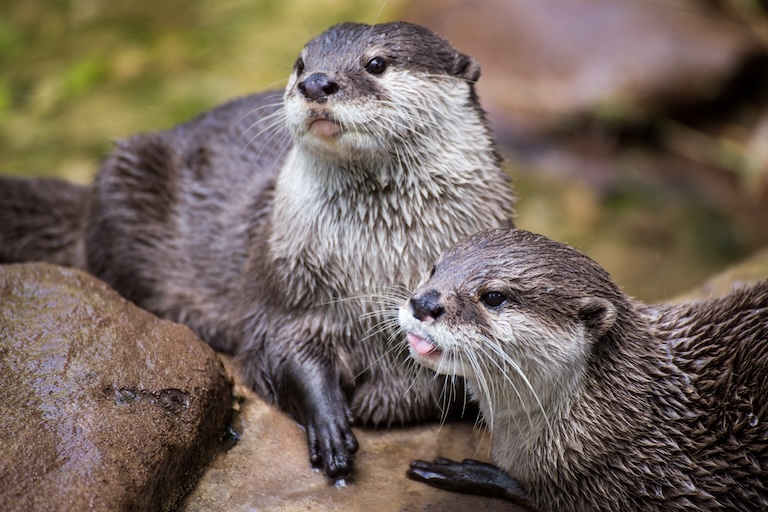
The Eurasian otter, despite being so widespread, is now on its path of decline. Their sensitivity to their habitats are their weakness, and all the development going on is destroying their homes. Rivers are being made into canals, so the banks no longer exist to hunt and eat clams on; wetlands are being drained to build houses, dams are shrivelling waterways, and poaching contributes a deliberate act of destruction to the mix.
This species, and the Neotropical river otter, too, are now listed as Near Threatened by the IUCN, but it gets worse for the Southern river otter, whose populations are in such danger they’re now considered Endangered. All of this for the same reason as the Eurasian otters, only with far fewer animals remaining to withstand it1.
River Otter Fact-File Summary
Scientific Classification
| Kingdom | Animalia |
| Phylum | Chordata |
| Class | Mammalia |
| Oder | Carnivora |
| Family | Mustelidae |
| Genus | Lontra |
| Species | canadensis |
Fact Sources & References
- Sepúlveda et al(2021), “Southern River Otter”, The IUCN Red List of Threatened Species 2021.