
Quail Profile
Rich folks love to use food to remind themselves of their superiority over others. Bluefin tuna was once so common it was pompously handed over to the cats. In the 17th Century, Lobsters were considered the “poor man’s chicken”, and were in such great supply that they were deemed peasant food – far too common for the elites to enjoy, and only became palatable up there when they were nearing extinction and sufficiently expensive.
Unfortunately, for the wealthy, the rich man’s chicken (chicken) is now considered so abundant and affordable to the unwashed masses, they need another animal as a symbol of their status. Enter: the quail.
These are, essentially, posh chickens with little to no meat on them and eggs so small you’d need 200 of them to make an omelette. But at least when you eat one, everybody can see how much better than them you are.
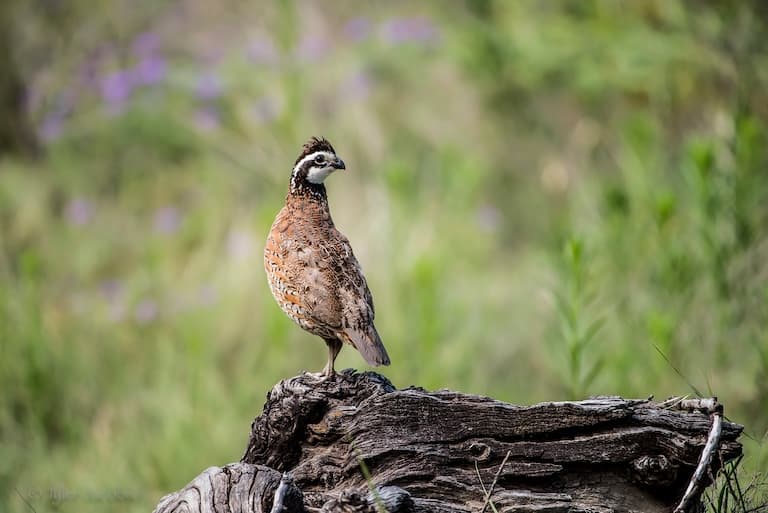
Quail Facts Overview
| Habitat: | Terrestrial, patchwork habitat with lots of grass and shrub cover. |
| Location: | Worldwide outside of Antarctica |
| Lifespan: | 6-20 years |
| Size: | From 15 cm (6 in) to 31 cm (12 in) |
| Weight: | Usually around 200 g |
| Colour: | Varied, from dull mottled browns to vibrant blues, greens and reds. |
| Diet: | Most eat seeds, fruits, berries and insects |
| Predators: | Raptors, cats, dogs, mustelids, snakes, humans |
| Top Speed: | 24 km/h (15 mph) on the ground, 64 km/h (40 mph) in flight |
| No. of Species: | 200+ |
| Conservation Status: | Many are Least Concern, others range from Vulnerable to Critically Endangered. |
The word quail is thought to come from the Medieval Latin, quaccula, which is likely to be an attempt to replicate its call. These are small, pretty and very sweet birds that run about in secret among the ground cover and can mostly be known by their charming calls.
Unfortunately, they’re hunted – in many cases – well beyond sustainable limits, and so some are now at high risk of extinction.
Interesting Quail Facts
1. There are a lot of things
Quails aren’t a single group of animals. They’re all birds, and they’re all in the Galliformes order, alongside chickens, pheasants and turkeys, but beneath that, they’re loosely grouped and not considered monophyletic.
There are three key groups. Two of them contain the vast majority of animals called quails, and these are the Phasianidae and the Odontophoridae families. Phasianidae, as you’d expect, is the pheasant family, and this is shared by grouse, peacocks, turkeys, chickens, and Old-World Quails.
Over in the New World, the Odontophoridae family is quite unrelated but contains many birds with similar characteristics. Finally, there is the buttonquail, which are tiny quail-shaped birds in the Turnicidae family, containing around 15 or so species, but these are not considered “true” quails, so they get their own blog post.
2. Old-World Quails
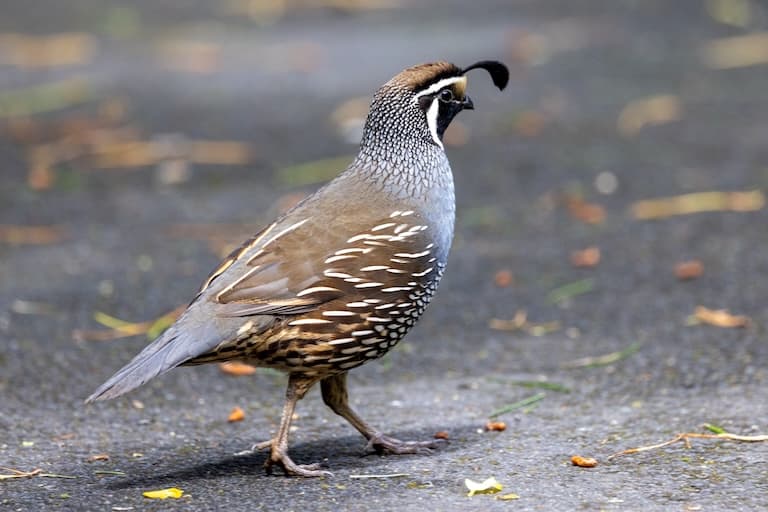
The Old-World quails are the OG quails. These are the birds after which all other quails get their names.
They belong to a tribe of pheasant-relatives called Coturnicini, but even at this level, they don’t get a ranking to themselves. This tribe also contains the snowcocks and African spurfowl, and so the name just refers to four genera of quail, primarily found in Eurasia and Africa, but also Australia and New Guinea.
3. New-World Quails
On the other side of the world, there are the American quails, and these are ten genera of quail-like animals that don’t share much of a close taxonomic relationship with the Old-World namesakes. These quails are similar in size and appearance, but can be distinguished by a lack of spurs, in most cases.
What they have in common with their Eurasian counterparts comes primarily from the niches they occupy. These, too, are shy, diurnal, ground-dwelling birds who make excellent sounds, live in woodlands and grasslands, and get about primarily on foot.
4. They’re runners
As birds, the quails’ collective nouns include “flock”, but also extend to bevvy, covey, and brace. Each word is used in a slightly different context though.
A flock typically refers to movement in the air, a covey is used when they’re on the ground, and a brace is used to describe just a pair of quail. These are mostly used in hunting contexts, which is the main reason most people pay attention to quail at all, but they should look deeper!
When on the go, quails are very adept at running. They are said to be able to run up to 24 km/h and dart about athletically in the undergrowth, only taking to the air in an absolute emergency. Quails can fly, but they don’t prefer to; they’d much rather look pretty.
5. They’re cute
The King Quail is, ironically, one of the smallest quails there is. This is a tiny and stunning little quail from around China and Southeast Asia, and comes in multiple different colour morphs, such as blue, brown, silver, maroon, dark brown, and black.
It is, in fact, the smallest species in the true quail group, reaching no more than 15 cm long, and does everything a quail does, but smaller.
They’re one of the prettiest, and make a descending, cheerful whistling call, not dissimilar in its charm to that of the other species of quail.

6. They come with a biblical warning
Religious texts often lock down traditions that seem entirely arbitrary but were once rooted in sense. The Abrahamic aversion to pork likely stems from an understanding of its potential for parasitic diseases. Shellfish, likewise, can rapidly decay into a very toxic chowder, and so is advised against in the Torah.
Quail, too, show up in the Old Testament. This time as one of OT God’s countless petty and cruel punishments, as he got tired of the Israelites complaining that they had been eating all the same manna for 40 years and forced them to eat quail for a whole month. Then he brought a plague upon them anyway.
So perhaps there’s some sort of message in there that eating too much quail can make you sick. And this, as it happens, is true. Quails can sequester environmental lead, cadmium, arsenic and nickel, all of which can cause quite a bit of upset to humans if they consume too much of it. Of course, there weren’t as many cars and jets bellowing out these poisons back in the Old Testament years, but the birds also eat a lot of toxic plants that can cause humans to get sick, too1.
7. They’re better heard than eaten
A large quail might donate just over 120 grams of meat if it’s in good condition when it’s killed. That’s about the equivalent of a quarter-pounder burger, but spread out across tiny limbs and ribs.
So, quails really are a poor person’s food, masquerading as a rich person’s food, and are much better appreciated in the wild, doing what quails do.
Quails are masters of camouflage, and then ruin it all by making really awesome, loud noises so you know that they’re there. They are small, cute, and a wonderful member of the forest floor and grassland communities, bringing a lot of character as wild animals to places even as barren and bereft of wildlife as the UK2.
8. Some are struggling
The British quail, or common quail, is doing quite well in the UK, but in its overall European range, it’s considered Near Threatened.
Other species are not so lucky. The Manipur Blush Quail is another very pretty example of a ground bird known from a small population around the Myanmar-Bangladeshi border. This one rarely flies at all and so is very hard to study, but the destruction and drainage of its habitat is thought to have put it on the ropes.
This is another one that’s hunted, and because of its habit of staying in tight groups when flushed out, can be killed easily in numbers with a single shot. It is now considered Critically Endangered3.
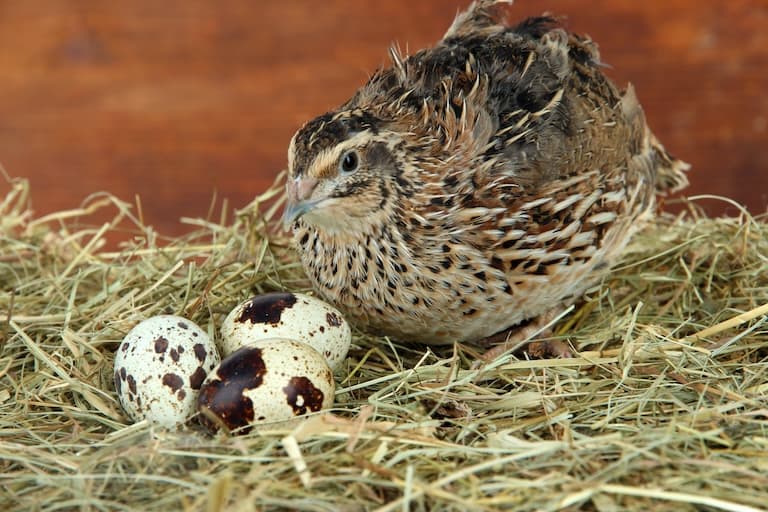
Quail Fact-File Summary
Scientific Classification
| Kingdom | Animalia |
| Phylum | Chordata |
| Class | Aves |
| Order | Galliformes |
| Family | Phasianidae and Odontophoridae |
| Genus | 65+ genera |
| Species | 200+ species |
Fact Sources & References
- Darwish et al (2018), “Metal contamination in quail meat”, PubMed.
- “Quail”, The Royal Society for the Protection of Birds (RSPB).
- (2021),“Common Quail”, The IUCN Red List of Threatened Species.