
Python Profile
There are few terrestrial predators around today that are as enduring as snakes. These animals have found a worryingly effective strategy all the way back in the Triassic and have stuck to it ever since. But they’re not remotely unchanged since then – they have come up with a multitude of adaptations to better fill their niches and this has led to the outstanding diversity in snakes that we still have today.
One adaptation, in a way, was to keep things simple. And of all families, there are few as simple as the Pythons. Pythons see, grab, squeeze and swallow, and then wait.
But even this family exhibits some incredible diversity, and today we’re looking at some of the ways such a simple approach to life can be such a successful one.
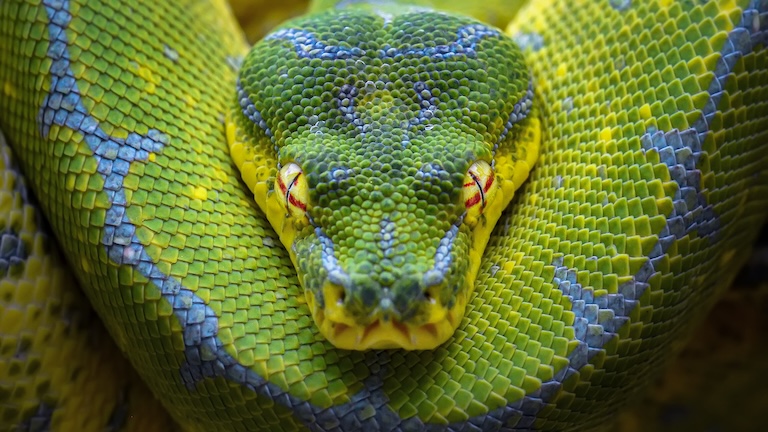
Python Facts Overview
| Habitat: | Varied: Terrestrial, arboreal, semi-aquatic, various climates |
| Location: | Worldwide outside of polar climates |
| Lifespan: | 40+ years in captivity |
| Size: | From 20 cm (8 in) to 7.22 meters (23 feet 8 inches) |
| Weight: | Very diverse: from 200 g to almost 200 kg |
| Colour: | Varied, typically camouflaged greens and browns |
| Diet: | Purely carnivorous |
| Predators: | Birds, other snakes, fish, crocodilians, humans |
| Top Speed: | Generally, not fast, typically no more than 7 km/h |
| No. of Species: | Around 40 |
| Conservation Status: | Varied, from Least Concern to Endangered |
Pythons are the all-terrain vehicle of the snake world. They are huge, powerful, adaptable generalist ambush predators found over much of the world, and can do it all – except inject venom. They are so successful that they can devastate environments that aren’t equipped to deal with them, so please don’t let them out!
Interesting Python Facts
1. They are old
The evolution of snakes is a slippery issue for a couple of big reasons. Snakes tend to prefer forests, which have such rapid turnover in the ground that they don’t produce a lot of fossils; and second, because snake bones are pretty fragile things to fossilise in the first place.
So, the task of identifying where and from whom each modern snake branch came is an ongoing one. But! It’s thought that pythons split from the common ancestor of boas sometime in the Late Cretaceous. This could have been as long ago as 100 million years, so while these two families of snakes produce iconic species that are remarkably similar (like the anaconda and the reticulated python, for example), they are not very closely related anymore. 1
So, Pythons were around during the time of T-rex, or at least, their early prototypes were. But T-rex was an American dinosaur, and there are no native pythons out that way, so the two probably didn’t overlap.
The earliest stem pythons don’t appear until the Palaeocene, which was after the dinosaurs relinquished their power, but they immediately took over the role as enormous constrictors, and fossils of these ancestral snakes show they were all over Eurasia and Africa at first. 2
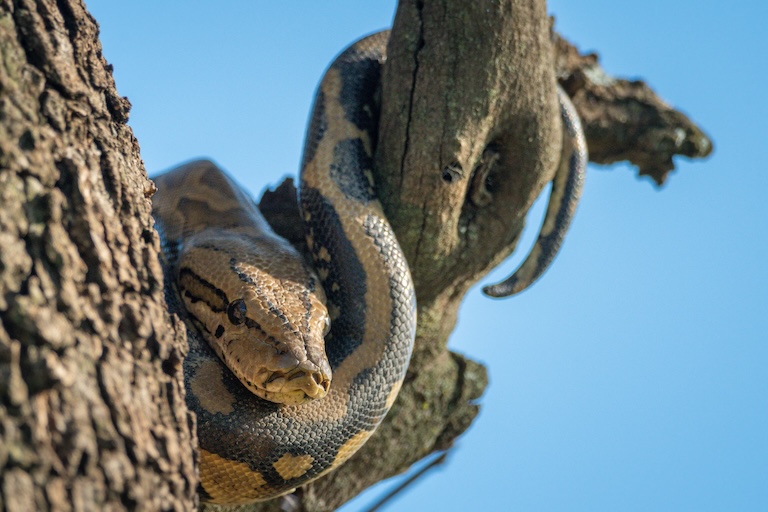
2. They’re incredibly successful
This impressive range has become much more restricted since then, but the family is still a very influential one. The boas have held the fort in South America, filling all the niches pythons would love to slither into, but elsewhere they are still thriving.
While not in Europe to any meaningful degree, pythons are the resident constrictors in Australia, Asia and Africa, and they show no signs of letting go. Pythons now range from moderate to enormous, semi-aquatic to arboreal, and almost every colour you can imagine.
Some, as we’ll see, are a little too successful.
3. They can be enormous
The smallest python, at 60 cm or so from nose to tail, is still a decent chunk of snake. But the upper end of this size spectrum is as big as it gets.
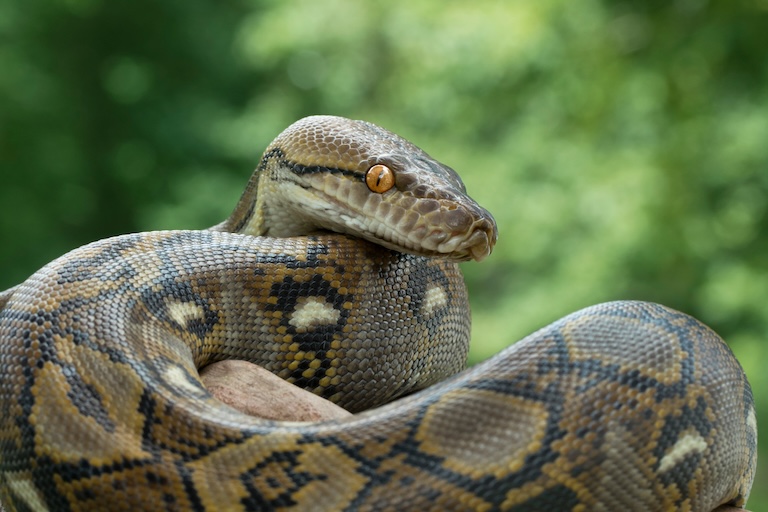
The reticulated python is the longest snake on the planet, averaging longer, even, than the green anaconda. It’s slenderer, and not as heavy as the anaconda, but to the people it has eaten, this isn’t much of a consolation.
4. They eat people
Fortunately for our species, snakes today are usually not big enough to consider us food. This wasn’t always true – there were snakes like Titanoboa that weighed over a tonne and might have reached 15 metres long. Those would have been a worrisome creature to live nearby. But they all died before we were invented. Today, snakes are mostly too small to eat people, but unfortunately for a small portion of our species, there is still some overlap.
Indonesian women are some of the smallest humans on the planet on average, and they have the unenviable situation of sharing their country with some of the largest snakes. Attacks on humans are exceptionally rare, but only possible where these two factors overlap, and have been reliably documented.
In Indonesia, and Malaysia, too, pythons have been found with human beings inside them. Usually when a wild animal eats a person, we like to placate our fears by claiming mistaken identity, but with snakes, sadly, there’s no such confusion. Reticulated pythons are opportunistic feeders, preferring to eat mammals. Humans are mammals, and some are small enough to eat, and so they are legitimately on the menu.
Still, this is not a common occurrence, and the vast, vast majority of people are not in danger from snakes. 3
5. They can be green
A more palatable fact about pythons is just how beautiful they can get. Most are mottled forest colours to hide in ambush in the mottled forest light, but others, like the green tree python, show off spectacular emerald colouration as they hang, relaxed, in the tropical tree canopies.
And the green tree python is a classic example of convergent evolution, as its doppelganger, the emerald tree boa, hangs in exactly the same way, dressed in almost identical green, on an entirely different continent. These two species didn’t come from a single green ancestor – instead, the similarity of their environments carved out specialised species to fill the same niches. 4
6. They can burrow
Pythons aren’t just about the canopy or understory, either. Some go even deeper.
The Woma python is an Australian species that’s adapted to the arid Badlands where everything’s really dry and hot.
Unlike many python species, these ones lack the heat-sensing pits on their snouts, but they have some sort of equivalent organ on their faces instead. They’re members of a group colloquially known as the Pitless Pythons, which would make a great rock band if they could agree on a creative direction.
They do spend a lot of time on the earth, but also beneath it, and can commonly be found in burrows. These burrows are also their killing chambers, and this snake is one of the few pythons that doesn’t use constriction, but the crushing force of its body against the walls of the burrow, to kill.
They mostly eat reptiles, but will also take small mammals like rodents, and birds, too, if they get the chance. They are said to be covered in scars from the struggles of their prey, which presumably they wear with pride. 5 6
7. They swim
Australia is a funny place for snakes. While it’s infamous for them, it actually has a very low diversity of snake families. What it does have are generally split between the highly venomous elapids (more than half) and the pythons (around 25%).
That’s because not all snake families have discovered the island continent yet. So, what’s there has wriggled into all the snake niches and you end up with animals like the death adder, which is an elapid who evolved into a viper-like phenotype.
Likewise, Australia is home to the water python, which took the chance to become semi-aquatic in the absence of the vipers that usually do this elsewhere. This one doesn’t look like a viper, nor does it have a venomous bite, but it is one of the most aquatic pythons on the planet.
Being a python, they can also get pretty big, at over 2.5 metres in length, and this opens up a wealth of food items for an opportunistic snake, from mammals to baby crocodiles and birds!
8. They are invading
Pythons are really good at what they do. They are incredible, ancient predators at the top of their game and they do it without the need for venom.
Unfortunately, being brilliant at killing things leads to diminishing returns when left unchecked. As humans, we are in no position to take the moral high ground on this count, but it is worth pointing out.
Burmese pythons, a popular pet snake species, grow to five metres long, and this has taken some people in the US by surprise, leading to them being released into the rich, subtropical ecosystems of the Everglades in Florida. Being warm and full of food, this location is everything a python wants, and the species has now added more than 75 native species to its menu.
They reproduce fast, they kill everything, and the ecosystem isn’t buffered against them, as the animals there never evolved alongside any native python species, so this is causing all kinds of harm to a unique environment, resulting in the tragic need for councils to go around killing them all. 7
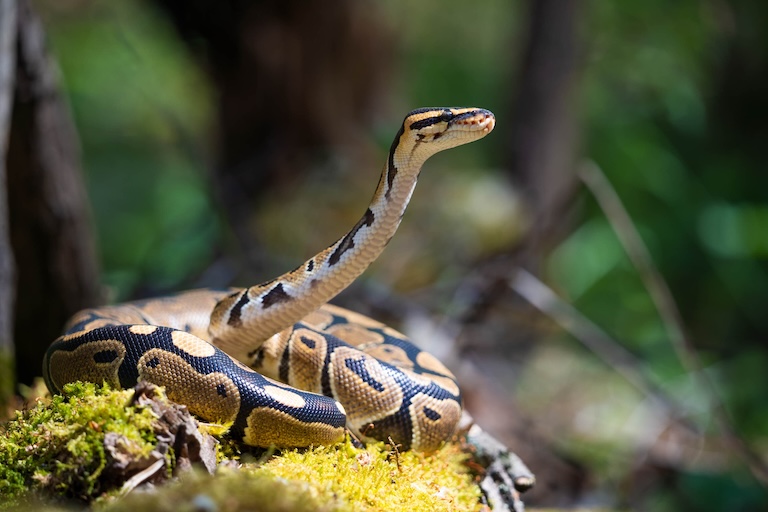
Python Fact-File Summary
Scientific Classification
| Kingdom | Animalia |
| Phylum | Chordata |
| Class | Reptilia |
| Order | Squamata |
| Family | Pythonidae |
Fact Sources & References
- Reynolds et al (2014), “Toward a Tree-of-Life for the boas and pythons: Multilocus species-level phylogeny with unprecedented taxon sampling”, Science Direct.
- Vidal et al(2004), “Molecular evidence for a terrestrial origin of snakes ”, National Library of Medicine.
- (2018), “How a giant python swallowed an Indonesian woman”, BBC News.
- Tye-Dyed Iguana (2005), “How to Take Care of a Green Tree Python! – A TDI Care Guide!”, YouTube.
- , “Check out Australia Zoo’s Woma Python!”, Australia Zoo.
- Snake Discovery, “All About Woma Pythons!”, YouTube.
- , “Burmese Python”, USDA National Invasive Species Information Center.