
Pygmy Rattlesnake Profile
This might be a hard sell to any ophidiophobes in the audience, but there is, in the US, a species of rattlesnake that can safely be considered “cute”. This little thing is less than half the size of the legendary desert menaces it shares a family with, and is often overlooked on account of it being well-hidden.
This is the pygmy rattlesnake, one of three small pit vipers that redefine how you look at rattlesnakes.
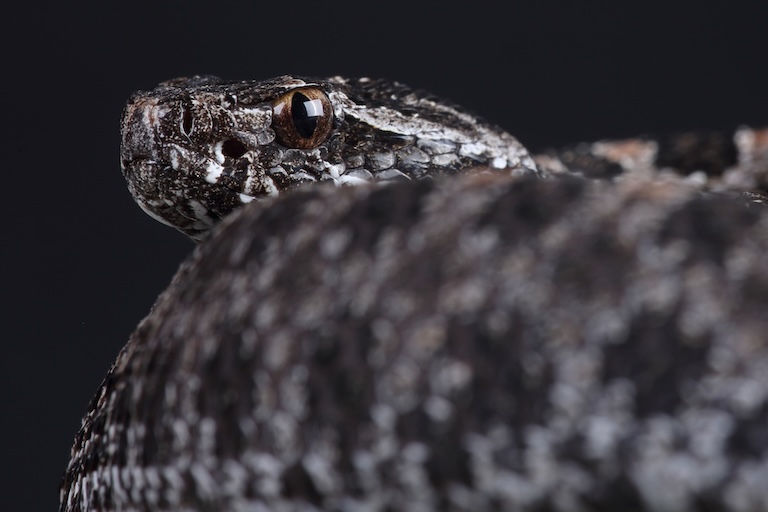
Pygmy Rattlesnake Facts Overview
| Habitat: | Wet prairies, swamps, floodplains, forests, wet savannas, pastures, and moist lowlands |
| Location: | Southeastern US |
| Lifespan: | 16 years |
| Size: | Average length of about 50 cm long |
| Weight: | No more than 630 g |
| Colour: | Mottled browns |
| Diet: | Insects, amphibians, small mammals |
| Predators: | Birds, alligators |
| Top Speed: | Unknown |
| No. of Species: | 1 |
| Conservation Status: | Least Concern |
The pygmy rattlesnake is, as the name suggests, small. But it’s still big enough to take on small mammals and frogs, which it is said to do by using its “rattle” as a lure. The snake goes by many names, some more believable than others, but its taxonomic name comes from an ancient instrument and the colour of millet.
Unlike its desert kin, this is a wetland wanderer, and spreads out all over the southeastern regions of the US. And it’s doing fine.
Interesting Pygmy Rattlesnake Facts
1. Nipple snake
This tiny snake has more common names than almost any other species we’ve covered on this site, but curiously, not all of them are easy to find in use outside of factoids that state this.
Some of the more reasonable and commonly-used names are ground rattlesnake, hog-nosed rattlesnake, little rattlesnake, spotted rattler and dwarf rattlesnake; but there are some that may simply be the product of a Wikipedia editor’s Freudian slip.
Bastard snake is fairly believable, but “nipple snake” is apparently quite an old one, and it’s hard to find any source of explanation for this.
Common names being what they are, binomial names are often far more useful, and this one is named after an ancient Greek instrument.
2. Millet-like sistrum
The genus Sistrurus contains only three species of snake, all of which are smaller than the infamous Crotalus rattlesnakes they share their continent with.
The genus name gets its root from the same place that we get the sistrum – a mysterious ancient Greek percussive instrument that may or may not have only existed in symbolism. This instrument was a rattle of sorts, and so it suits the snake, whose rattle is definitely more than just a symbol.
The pygmy rattlesnake gets its species name miliarius from the colour of millet, which is a cute way to describe this mottled brown snake. And they come in three small flavours.
3. They’re tiny!
There are three subspecies of this small snake, and each of them earns the pygmy in their name. The subspecies are the Dusky, the Carolina and the Western pygmy rattlesnakes, and they divide the US up into territories with the Dusky taking the alligator states of Georgia and Florida, the Carolina extending from Georgia up into the Carolinas and Alabama; and the Western taking the Mississippi through Louisiana into Texas, Arkansas and Tennessee.
This genus is made up entirely of much smaller snakes than the Crotalus species, and the pygmy rattlers specifically usually top out at half a metre long, and never more than 65 cm. The highest weight recorded appears to be around 625 g, which is significantly more petite than, for example, the Mojave rattlesnake, which can grow to well over 1.2 metres and weigh around 1.5 kg.
But those are desert snakes. Pygmies like a moister environment. 1
4. They like it wet
Pygmy rattlesnakes are similar in their ecology to some of the smaller vipers like the water moccasin, at least in some of their range. They patrol wet prairies, floodplains and moist lowlands, where they can feed on insects and amphibians. They do take mammals as well, but being so small, there are fewer safe options on that menu.
The Carolina rattlesnakes are almost exclusively forest-dwellers, but even these will stay close to water, where they can hide in the thick plant cover. 2
5. They’re highly venomous
There are many aspects of a snake’s venom to consider when calculating risk. First, how toxic is it? Then, what kind of toxin? How potent is it? And finally, how much of said venom is administered through each bite.
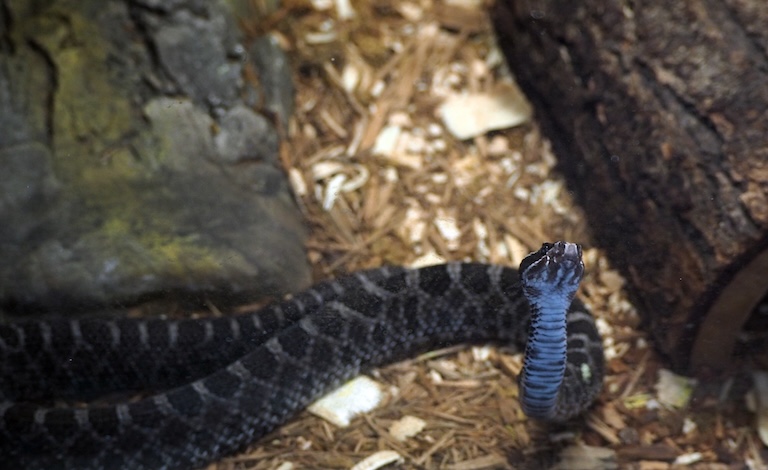
This little rattlesnake may be cute, but it’s still a rattlesnake, and it has a very strong hemotoxic venom. Like many vipers, its venom contains much less of the neurotoxic profile of the Elapid snakes like cobras – in fact, this species has no known neurotoxic components in the venom at all.
But the pygmy rattlesnake is just so small that it’s unlikely to produce enough of this venom to kill a person. We’re not going to go as far as to say it would be a fun ride to get tagged by one of these little serpents, but curiously enough its venom does contain serotonin and tryptamine compounds, which we humans use for happy things like euphoria and sleep.
But don’t get the wrong impression! Serotonin does a thousand or more things in the body, and too much of it can destroy tissues (see, serotonin syndrome)! 3
6. They aren’t very rattly
That little Greek instrument, if it was a real instrument, likely didn’t make the same sound as this snake. The pygmy rattlesnake’s tail isn’t as robust and intimidating as the larger rattlesnakes, and is used just as much as a lure than as a deterrent.
The slight buzz it produces is very cute, and is caused by the interlocking segments rubbing on one another, and not by the loose sections of keratin seen in other larger species. 4
7. They don’t hibernate
Being snakes, pygmy rattlers do prefer warmer weather, but unlike their larger relatives they don’t appear to go into hibernation when it’s cold. Instead, they can be seen blanketing themselves in foliage for protection and waiting it out, emerging as the season changes to hunt more energetically.
This is, of course, because they don’t live in places where it gets cold enough to require hibernation, but while their range is seemingly restricted to the warmer regions, this is still a vast and habitable place for the snake, who is doing very well and is considered Least Concern by the IUCN. 5
Pygmy Rattlesnake Fact-File Summary
Scientific Classification
| Kingdom | Animalia |
| Phylum | Chordata |
| Class | Reptilia |
| Order | Squamata |
| Family | Viperidae |
| Genus | Sistrurus |
| Species | miliarius |
Fact Sources & References
- Rebecca Stamm (2017), “Sistrurus miliarius ”, Animal Diversity Web.
- Rebecca Stamm (2017), “Sistrurus miliarius”, Animal Diversity Web.
- Anton et al (1965), “Norepinephrine and Serotonin in the Tissues and Venoms of two Pit Vipers”, Nature.
- , “Pygmy Rattlesnake”, Mississippi Department of Wildlife, Fisheries, and Parks.
- Hammerson et al (2007), “Sistrurus miliarius”, IUCN Red List.