
Powderpost Beetle Profile
The more one studies ecology, the more disrespectful the word “pest” seems to be. We love to complain about the impact that other species have on us, and give far less attention to the disproportionate impact we have on other species.
The Powderpost beetle is one victim of our immovably homocentric approach – this humble little insect goes about its boring life, minding its own business, eating, rearing a family, sitting around the fire with its grandchildren – until we come along and gas its whole family to death for chewing on all our wood.
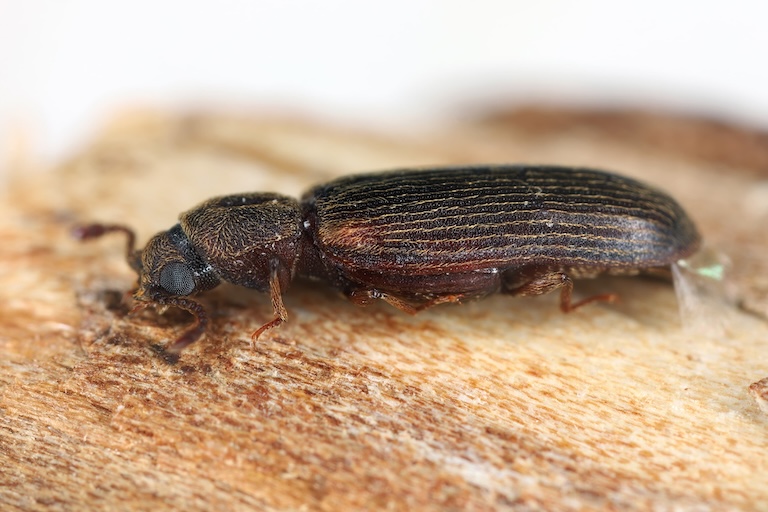
Powderpost Beetle Facts Overview
| Habitat: | Hardwoods, dry timber, deciduous trees |
| Location: | Commonly North America, introduced elsewhere |
| Lifespan: | Usually 1-2 years as a larva, one year at most as an adult |
| Size: | Usually only around 4 to 8 mm |
| Weight: | Not recorded |
| Colour: | Adults are usually light brown to reddish brown, sometimes darker; larvae are cream-coloured |
| Diet: | Wood starches |
| Predators: | Wasps, other insects |
| Top Speed: | Slow |
| No. of Species: | 70 |
| Conservation Status: | Not Listed |
Alright, powderpost beetles do a substantial amount of harm, and it’s perfectly reasonable to put methods in place to stop that. This pest species causes almost as much damage to human structures as the termite, but there are ways to avoid it, and this should always be the focus of pest prevention, since all creatures have their role in the same inter-connected web of ecology that feeds, clothes and houses us.
So spare a thought for the tiny but deeply destructive powderpost beetle, who simply doesn’t know any better!
Interesting Powderpost Beetle Facts
1. They’re a whole subfamily
Powderpost beetles are a large group of around 70 or so species of so-called auger beetles. Auger beetles are any beetle in the family Bostrichidae, and powderpost beetles make up only 10% of this. If you’ve done the maths, that makes around 700 species in the family, but this isn’t unusual for beetles, as they are immensely diverse animals!
Auger beetles have c-shaped larvae and are typically armoured around the thorax so that the head is hidden. While the powderpost beetle follows the trend of little C larvae, it shuns the thoracic armour and is one of two subfamilies for which you can actually see the adult’s head.
This subfamily, Lyctinae, does toe the line for the auger beetles in most other ways, though: they are wood borers, meaning they chew into trees, under bark, and – as we’ll discuss – into the foundations of many houses.
And this is where they get the name from.
2. Why Powder Post?
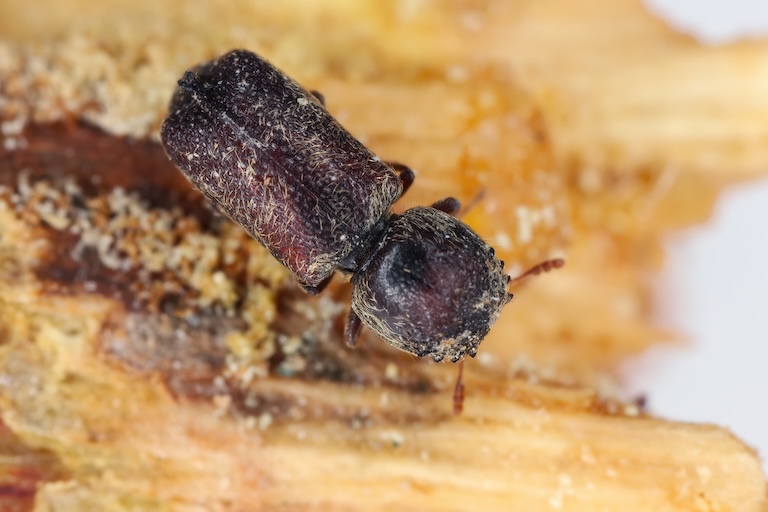
The common name for this group of beetles sounds a bit like a 1998 Cartoon Network production, but it comes not from their origins as superhero kindergarteners but their ability to create powder from dry wood.
It’s said that a powderpost beetle can turn a nice chunk of dry wood entirely to dust, and this has given them a level of infamy, which we’ll cover shortly. But they don’t do this for fun – powderpost beetles are just living their lives, grazing on the roughage available to them, which, in this instance, is your grandpa’s shack.
3. They’re boring herbivores
Boring beetles are defined by their ability to burrow through wood, not their lack of charisma. In fact, beeltes are oozing charm in almost all cases (just ask the ancient Egyptians), powderpost beetles included.
Boring beetles aren’t a taxonomic group, and are made up of multiple families of beetles, but they tend to leave little holes in things, which are primarily the result of the beetle finishing the job, rather than starting it.
These holes are caused by the emerging adult, who pupates from the larva, and it’s the larva that’s responsible for almost all of the boring. These little guys are tunnelling between the fibres of food, chewing up all the sugary bits inside and growing fat.
They are essentially like little burrowing cows and they can stay inside the wood for up to two years just mooing and chewing, before they’re large enough to make it to adulthood and find some beetle tail.
Females can lay up to 220 eggs, which are pushed into the gaps in these wood fibres, and the cycle continues. Unfortunately, this cycle is too often occurring in the very foundations of our living quarters. 1
4. They’re a pest
Antique furniture is often riddled with tiny holes, and these are often referred to as “woodworm” holes. Woodworm beetles are actually from an entirely different family of beetles, but the effect of a powderpost beetle is more or less the same.
In fact, powderpost beetles are said to come second only to termites in their ability to ruin furniture, and even more troublesome is their ability to damage structures, such as houses, that are built out of wood.
Again, the little holes you see are actually from the emerging adults, who chew their way out and don’t really eat the wood at all. It’s their larvae, the little C-shaped grubs, who tunnel through wood, feeding on the starches inside.
This might not do much damage per individual, but in their thousands, this is one of the biggest pest concerns for wooden structures in their range.
5. But they can be defeated!
Since this beetle feeds on the starches in wood, there are ways in which houses can become immune. Bacterial processes in dead wood can use up all those starches over time, without affecting its structural integrity. Well-aged hardwood has nothing for these beetles to feed on.
Even better, dead softwoods are said to be immune to infestations from powderpost beetles, too, which offers an easy fix, though isn’t as appealing as a solid oak mansion. But there’s even good news to be found for hardwood lovers: this beetle really only feeds on the outer sapwood layers, and not the denser heartwood, meaning that real solid wood structures, made from the heartwood of enormous trees, are safe from anything more than a superficial infestation of powderpost beetles.
For affected structures though, if the beetles are left too long, the only solution may well be fumigation. And this seems like a pity, since the beetle is just living the only life it knows, but then again, so are we. And overall, there’s not much chance of the beetles going extinct any time soon.
6. Our Industries are the Problem
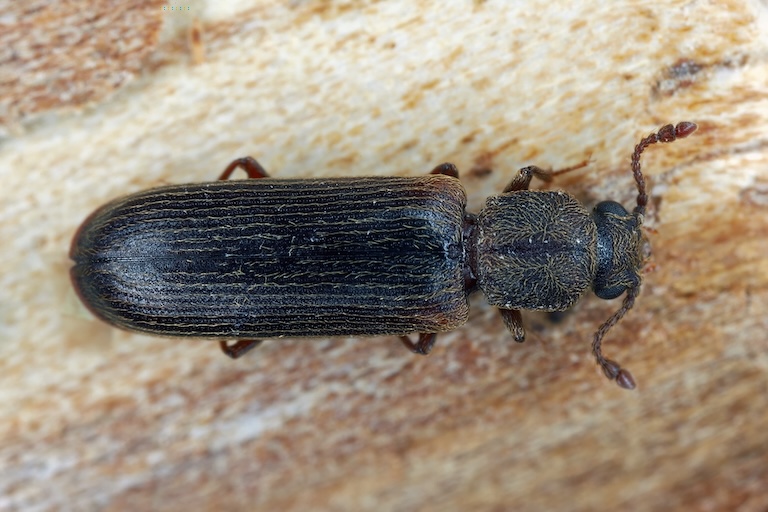
This type of beetle feeds on wood that isn’t very old and isn’t very dry. Our rampant destruction of all forest cover is ongoing, and mature wood is increasingly being replaced by fast-growing, pubescent timber sources that aren’t very big when they’re harvested. Furthermore, when efforts aren’t employed to reduce the exposure of the fresh cut wood to the beetles, they can sneak in and lay their eggs before any coating or treatment is applied.
They may then sit unnoticed for up to two years while they do their dirty work in the fresh hardwood floors of your new house, emerging well after the warranty has expired and you’ve already installed your piano. This is particularly true if the wood hasn’t been properly dried, as they will primarily only eat damp wood.
So, with a few behavioural changes, infestations can be avoided to a degree. And with some better choices in building materials, you might only be left with termites to worry about. 2
7. They’re of ecological importance
As with all “pest” species, powderpost beetles do more for the environment than mess it up. With 70 families of beetles and quite widespread, not only are we never going to get rid of them, but we most certainly shouldn’t be trying.
This amount of diversity and biomatter is a link in the ecological chain that holds everything together, and these beetles provide a wealth of food for wasps, spiders and other animals, which in turn feed the birds and bats, etc.
So, the humble floorboard cow should be encouraged to graze elsewhere, and fumigation should always be a last resort after all avoidance methods have failed.
Powderpost Beetle Fact-File Summary
Scientific Classification
| Kingdom | Animalia |
| Phylum | Arthropoda |
| Class | Insecta |
| Order | Coleoptera |
| Family | Bostrichidae |
| Subfamily | Lyctinae |
| Species | 70+ |
Fact Sources & References
- , “Powder-post beetle (Lyctus brunneus) identification guide”, Natural History Museum.
- Adam Wareing(2025), “What Causes Powderpost Beetle Infestations in Newer Hardwood”, Sussex Damp Experts.