
Pomeranian Dog Profile
The word Pom has various meanings, depending on who utters it. It could be a disparaging term for an English person, an initialism to remind you to check your mirrors before pulling out, or half of those fluffy balls cheerleaders wave about.
Coincidentally, it’s also short for the Pomeranian dog, a small animal, easily confused with those fluffy balls cheerleaders wave about.
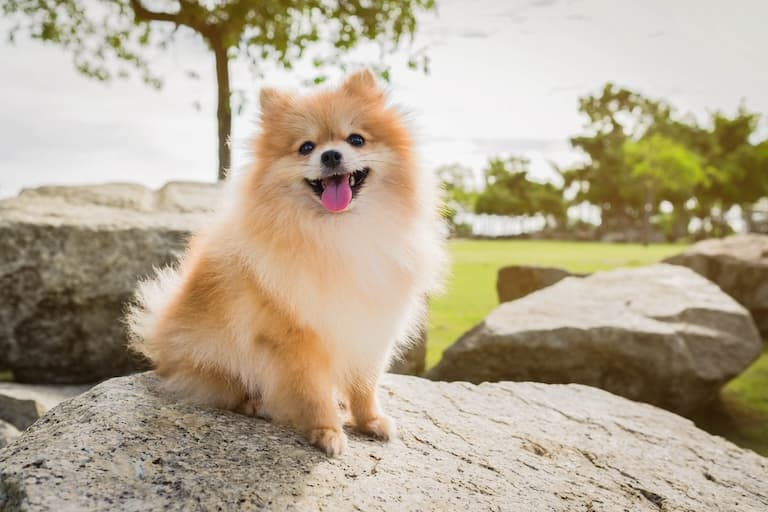
Pomeranian Dog Facts Overview
| Habitat: | Domestic, ha |
| Location: | Worldwide |
| Lifespan: | Around 12, up to 14 |
| Size: | Up to 18 cm (7 in) |
| Weight: | Up to 3 kg (7 lb) |
| Colour: | Usually orange, red, cream, white, or black. |
| Diet: | Small dog food |
| Predators: | None |
| Top Speed: | Around 9.5 km/h (6 mph) |
| No. of Species: | 1 |
| Conservation Status: | Not Threatened |
This is a dog with a very mixed reputation. Whether it’s a yappy little pea-brained fluff ball or a clever and loving family guardian depends on both nature and nurture when it comes to Pomeranians.
At their best, these dogs are sharp, charismatic, stubborn and sassy, but at their worst, they’re everything the stereotype suggests they are!
Interesting Pomeranian Dog Facts
1. They’re Toy Dogs
This is a word that should never be used to describe an animal, but one that commonly comes up as a perk to getting a Pomeranian. Another disrespectful descriptor of the Pomeranian is “Portable” and for the same reason.
These tiny dogs are in the disturbingly-named size class of “toy” dog, which is uttered unironically by the kinds of people who think of dogs as toys. But they weren’t always this way!
Pomeranian dogs descend from the larger Spitz-type dogs, who come from a proud lineage of Arctic specialists and are characterised by their sharp ears and a tail that curls over their backs. The Finnish Spitz is a good example of everything the Pom could have been: tall, intelligent, athletic and dignified.
Instead, it was bred to fit neatly under the arm, freeing up the hand for holding a Margarita at Brunch on a Wednesday.
Pomeranians have a reputation as being silly little yappy dogs, but as we’ll discuss, this might be more of a reflection of the kinds of people who keep them.
2. They were royalty
Queen Victoria has a lot to answer for. White wedding dresses, Christmas trees and taking selfies are all things whose popularity can be traced back to her appreciation of them. Pomeranian dogs, too, owe their surge in popularity to the fact that Victoria had a very little one, which – it is said – is why this toy breed is found all over the place now.
From the photos and paintings of her dogs, it seems Pomeranians were a lot larger than they are now, and records show Pomeranians were typically up to 14 kg in weight, while Queen Vic’s dogs were closer to 5 kg. The Queen even set up a breeding kennel for Pomeranians herself.
This novelty of a tiny, pocket-sized dog set off a trend for the unwashed masses to follow suit, and cemented the Pomeranian as a status symbol. But they are so much more than that!1
3. They’re powerful!
Pomeranians are strong in will and physicality, the latter being relative to their tiny size, of course. They’re said to still carry with them some semblance of their sled-pulling ancestry, and their stubbornness and sass is quite typical of the spitz breeds, too.
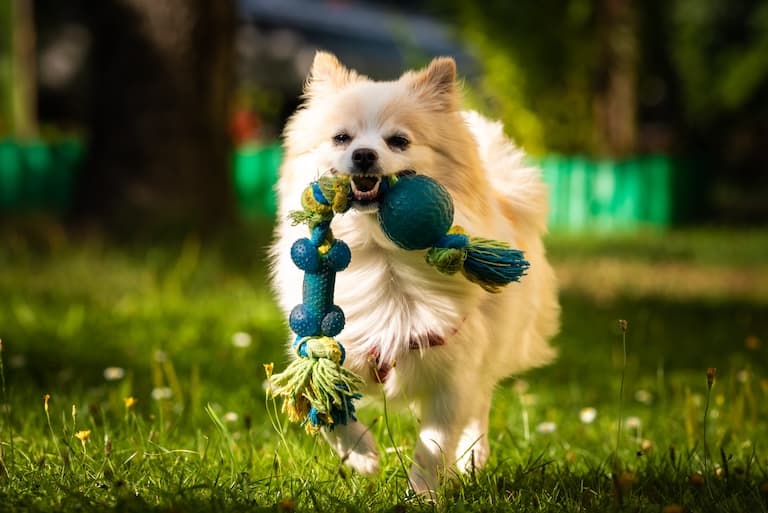
Pomeranian dogs do well in agility, having high energy and trainability to rocket through courses.
Their puffball appearance gives them the look of Fizzgig from Dark Crystal and they have a tendency to shout a lot, too, but a lot of the behaviours that give this breed its bad reputation comes from poor ownership.
4. They’re quite smart.
When a big dog isn’t well trained, people tend to get hurt. This is one reason why you see far fewer of the larger breeds nipping at ankles and throwing angry tantrums. When a breed is small enough to punt over a fence, owners get a bit lazy with the training, and when combined with the day-drinking socialite who considers a pet something you wear, lots of “toy” breeds are understandably mal-adjusted.
So, it can be surprising to hear how easy Pomeranians are to train, given the fact that many people don’t seem to bother to try. Indeed, they wouldn’t be very good at agility courses if they were dumb.
Pomeranians are yappy when not corrected, and can be aloof with strangers, but they are said to be good with kids and other pets, and can be inquisitive and alert in general2.
5. They can get jealous
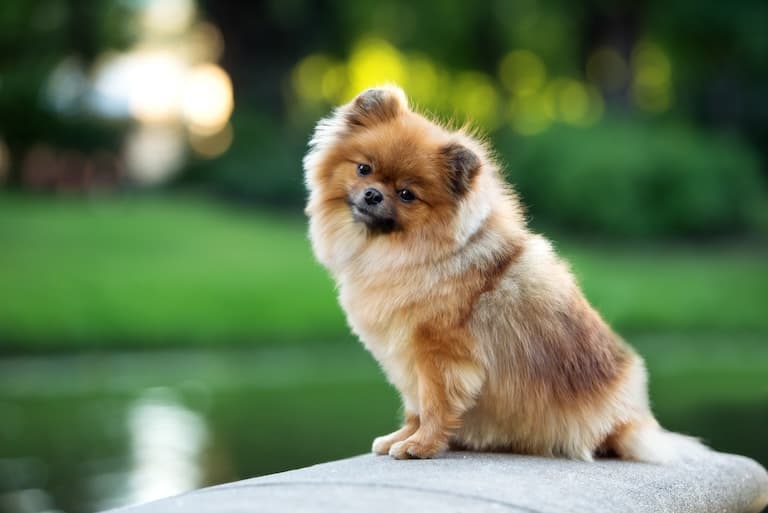
This breed has a reputation as a one-person dog, which may or may not be down to the nature of that one person to spoil them and not treat them right. Dogs of all sizes can become accustomed to and protective of cuddles, and a tiny, fluffy one is a lot easier to cuddle often, so training and discipline must go hand in hand with affection when keeping a tiny dog like this.
6. They’re not very healthy
Being unrealistically tiny and also a purebred dog, Pomeranians are imbued with a host of genetic issues that manifest as disorders and diseases.
They are prone to dislocated kneecaps, gallbladder issues, spinal dislocation, deafness, blindness, and other issues as a result of their wonky genetic stock, and of course there will be many a Pomeranian dog born with barely enough brain cells to function, which further contributes to their reputation.
They also don’t live for very long for such a small dog, usually lasting around 12 years, or about the same as a German Shepherd. Finally, they have one of the smallest litter sizes of any breed, birthing around 2 puppies per litter.
So, this is by no means a healthy breed, and likely has a lot of discarded runts in its breeding history, too.
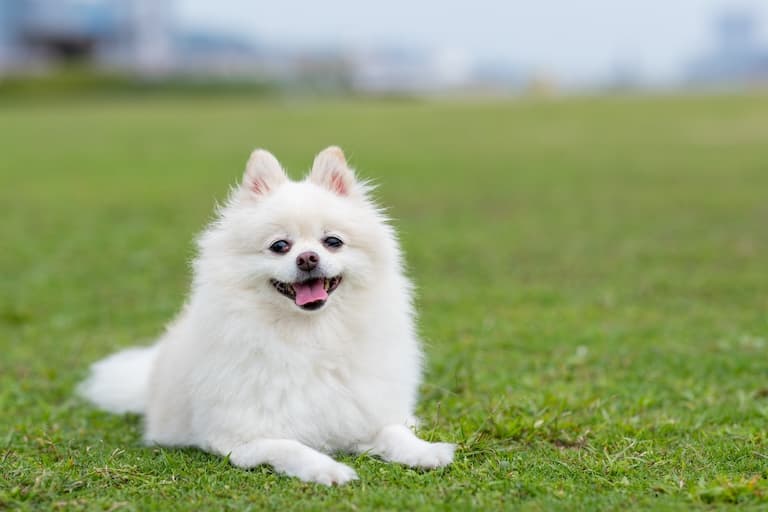
Pomeranian Dog Fact-File Summary
Scientific Classification
| Kingdom | Animalia |
| Phylum | Chordata |
| Class | Mammalia |
| Order | Carnivora |
| Family | Canida |
| Genus | Canis |
| Species | lupus (familiaris) |
Fact Sources & References
- “Queen Victoria’s Beloved Pomeranians”, Minute History.
- “Pomeranian”, American Kennel Club.