
Paradise Fish Profile
The days of winning a sickly goldfish in a plastic bag at the local fair are, thankfully, over. But the goldfish remains an icon of Western households – despite it being of Asian origin. This colourful carp was introduced to Europe in the 1600s, making it the oldest exotic freshwater fish to become an ornament in Western homes.
The second-oldest is quite different. Far from the placid bobbing of Goldie, it’s an aggressive, angry-coloured and flamboyant little beast from the family that brings us the Siamese fighting fish. If this animal represents the conditions in heaven, expect to get beaten up for all eternity. Introducing: The Paradise fish.
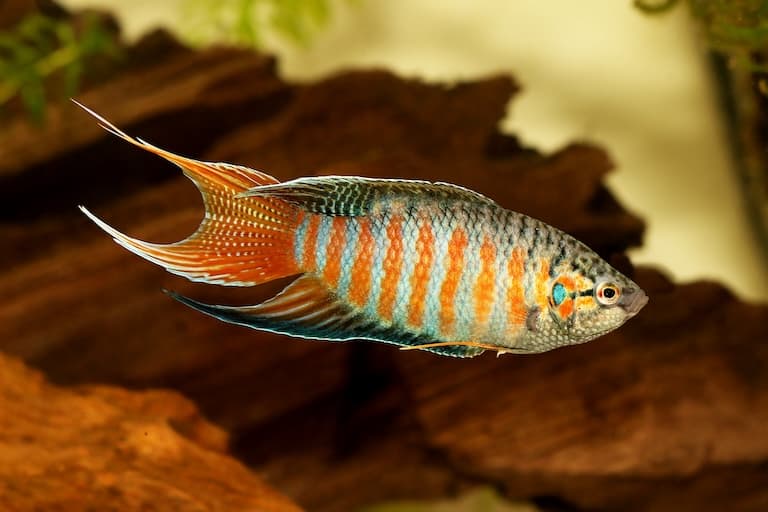
Paradise Fish Facts Overview
| Habitat: | Mostly clear, shallow, freshwater with lots of vegetation. Often found in rice paddies |
| Location: | Native and widespread across East Asia; introduced worldwide |
| Lifespan: | Up to 10 years in captivity |
| Size: | Up to 6.7 cm (2+5⁄8 in) long |
| Weight: | Not listed |
| Colour: | Varied: males are usually orange-red base colour with blue vertical stripes and purple heads; sometimes bluer |
| Diet: | Predatory: feeding on insects, other invertebrates, and fish larvae |
| Predators: | Birds and larger fish |
| Top Speed: | Not listed |
| No. of Species: | 1 |
| Conservation Status: | Least Concern |
Paradise fish belong to a well-known group of freshwater fish, championed by the unfortunate beta, whose beautiful appendages and aggressive nature have led to its abuse in the hands of people who like to watch them fight.
And the paradise fish carries some of that aggression, too. It’s a well-known scrapper, highly territorial, very beautiful, and tough as nails for something so small. For better or worse, this makes them easier to keep in aquaria, which means there’s less pressure on wild populations to supply the demand, but they are still suffering from increasing pollution of their wild habitats.
Interesting Paradise Fish Facts
1. They’re Macropods
The Anabantiformes are an order of bony fish commonly known as the labyrinth fish. This isn’t a reference to their tangled and labyrinthine freshwater habitats – although many do prefer this life – it’s a nod to the unique organ that labyrinth fish have inside them.
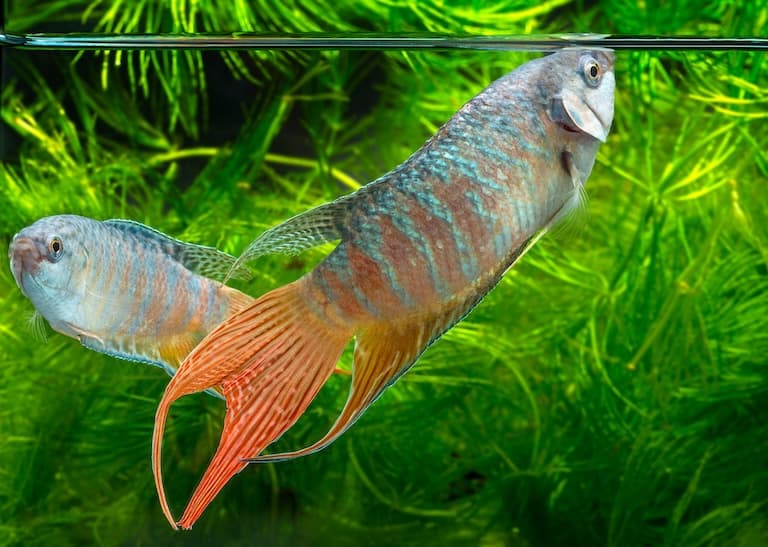
This secondary breathing organ is an analogue of a lung, and allows the fish to gulp in atmospheric air and extract its oxygen, giving it the ability to thrive in hot, shallow water, where most fish would suffocate.
These fish are native to Asia and Africa, and are split into three suborders and around 8 families. One such family is Osphronemidae, which contains the fish commonly known as the Gouramis.
Both the Betta genus and the Paradise fish genus, Macropodus, are found in this family. And strangely, Macropodus means “big foot”.
2. Chinese betas
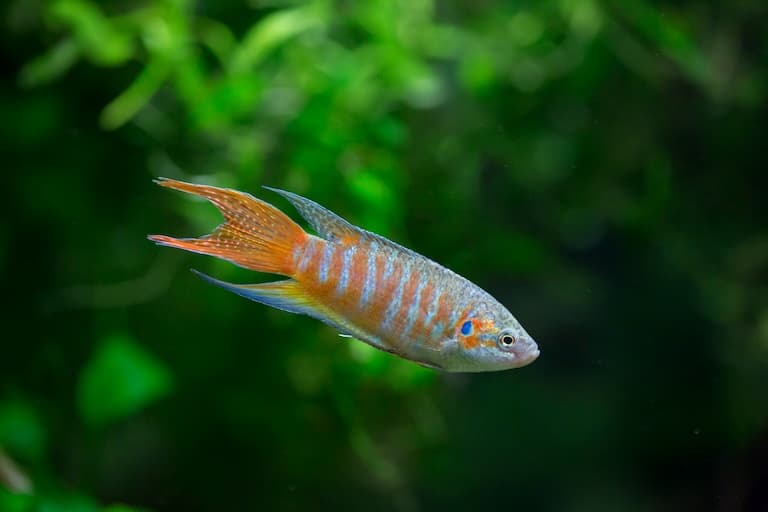
The paradise fish is a pelagic species of freshwater fish from East Asia, and the genus – the so-called big-footed Macropodus – is named after their paired pectoral fins, which stick out slender and elongated from under the head. Males also have elongated anal fins that trail behind them and elegant, forked tails to boot.
These are very glamourous fish all round, and while perhaps not quite as extravagant as the infamous Betta, they can hold their own when on parade. This has led to another common name for the paradise fish: the Chinese beta.
3. They fight
Another similarity the Paradise fish have with the Betas is their apparent attitude problem. This has led to all kinds of popularised animal abuse in the Bettas, who are commonly collected and pitted against one another for entertainment, at great harm to the fish themselves.
Paradise fish share this aggression, and are well known for being eager to fight other fish. This is a territorial behaviour, primarily seen in males, and mostly aimed at other males of the same species. In the wild, fighting is more of a choice, and easily avoided by the weaker male, who can simply move elsewhere; in captivity, males trapped in a tank together often fight until one or both are mortally wounded.
4. They’re tough
Paradise fish aren’t just bad-asses in the fighting department; they’re also surprisingly hardy fish. In the wild, they live in temperate waters as cool as 5 degrees Celsius, all the way up to the tropical waters of 26 degrees Celsius1.
On top of this range of temperatures, the Paradise fish has a very high tolerance to low-oxygen environments on account of its Labyrinth organ. This allows it to inhabit stagnant pools where most competition wouldn’t survive2.
5. Floating saliva bubble nests
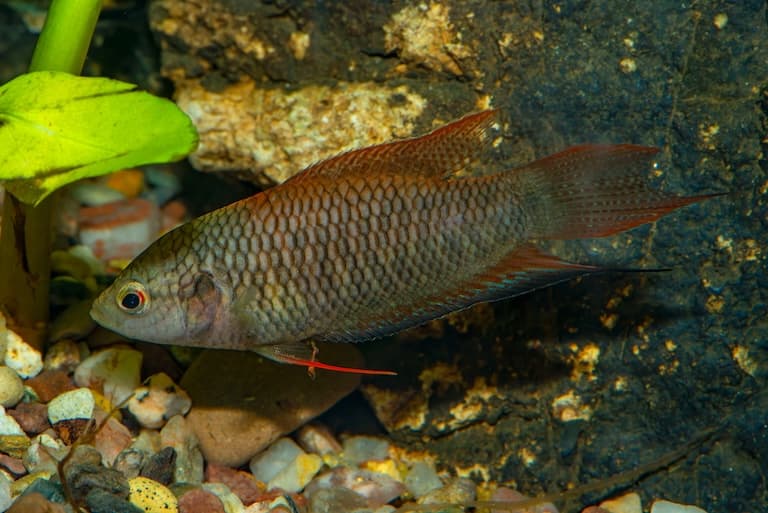
When paradise fish are ready to breed, the dominant male will build a special nest to house the female’s fertilised eggs.
He’ll do this by creating what’s known as a bubble nest, often composed of a mixture of saliva, plant matter and air, which accumulates in a thick, floating mass of spit on the surface of the water. He’ll then guard this spit nest dutifully and will even attack its mother if she gets too close.
In captivity, the presence of potential egg predators sharing the tank actually stimulates stronger guarding behaviour in the males, which increases the chances of more of their eggs hatching.
6. Pollution is affecting them
As tough as this fish is, it has its limits, and in the wild, across its range, this species is declining due to runoff from agriculture and forestry on land.
The good news is that the IUCN still considers Paradise fish to be of Least Concern on their conservation rankings, so they are still expected to have a sustainable population size, but as long as these numbers are in decline, it’s only a matter of time before that changes3.
Thankfully, this species readily breeds in captivity, so there’s one less thing to worry about from the pet trade, but already, there are noticeable differences between the captive bred and the wild-caught paradise fish.
7. Captive individuals may be less aggressive
In the wild, paradise fish are active predators and fiercely territorial. But hobbyists have noted that captive-bred individuals, who are provided plenty of food and shelter, not only become more colourful than their wild counterparts, but also less aggressive.
This is good news for the fish that are kept alongside the paradise fish, and good news for most owners who aren’t keeping them for fighting purposes. But it also shows that there could be biological differences entering the captive gene pool which may cause trouble if they are ever released back into the wild.
Paradise Fish Fact-File Summary
Scientific Classification
| Kingdom | Animalia |
| Phylum | Chordata |
| Class | Actinopterygii |
| Order | Anabantiformes |
| Family | Osphronemidae |
| Genus | Macropodus |
| Species | opercularis |
Fact Sources & References
- Linnaeus (1758), “Paradisefish ”, Fish base.
- Huckstorf (2012), “Paradise fish”, The IUCN Red List of Threatened Species 2012.
- Huckstorf (2012), “Paradise fish”, The IUCN Red List of Threatened Species 2012.