
Pacific Cod Profile
There’s a saying in the Anglosphere that you’re never more than six feet from a rat. But in the UK, you’re never more than six feet from a fish and chip shop, and this, for most of us, is about as up close and personal as we ever get with a cod.
And that’s a pity, because these large and interesting fish are more than just a battered fillet: they are powerful, successful fish in their own right, and perhaps the very inspiration for one of the animal kingdom’s first ever self-imposed limiting factors.
Today, we’re lauding the Pacific cod – one of the most significant animals in modern human history.
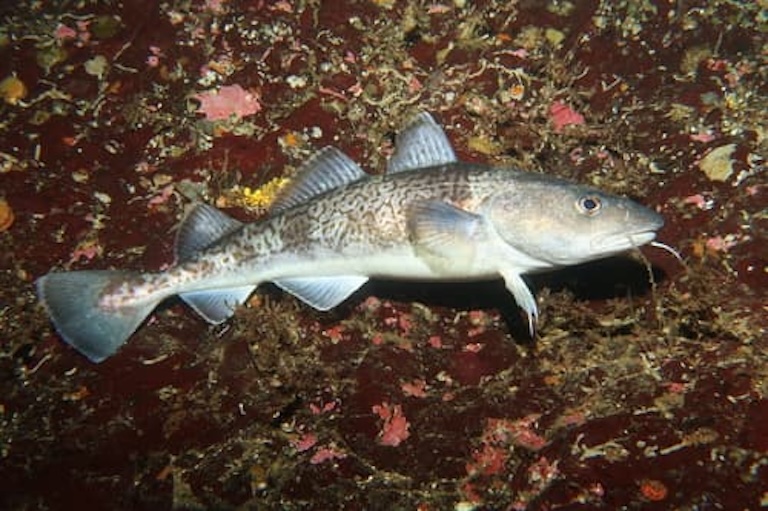
Pacific Cod Facts Overview
| Habitat: | Marine and coastal shelf |
| Location: | Northern Pacific Ocean, probably the Arctic Ocean (if synonymous with Greenland Cod). |
| Lifespan: | Possibly more than 20 years, based on closely related species |
| Size: | Up to 1 m (40 in) |
| Weight: | Up to 23 kg when not killed early |
| Colour: | Brown or greyish body with darker, mottled patterns on the sides, pale, off-white belly |
| Diet: | Clams, worms, crabs, shrimp, and juvenile fish |
| Predators: | Fish, marine mammals, birds |
| Top Speed: | Not recorded |
| No. of Species: | 1 |
| Conservation Status: | Not Evaluated |
Pacific cod are medium-sized marine predators of the temperate and cold waters of the Northern Hemisphere. They have a very long history as one of the fishing industry’s primary support animals yet they are under-studied as a wild animal, and they deserve better. Pacific cod are intelligent, hugely social, and immensely ecologically significant, not just to us, but to the wider world. And they may yet save the planet!
Interesting Pacific Cod Facts
1. They’re Gadids
Pacific cod are members of the Gadiformes order of fish. This is a group of fish whose members are incredibly popular to eat, and includes haddock, pollock, hake, and the true cods.
The cods aren’t a single taxonomic group; the word is a common name for several species in multiple genera in this family, but the genus Gadus is a good place to start, and this contains the very well known Atlantic cod, the Greenland cod, and the Pacific cod. Confusingly, it also contains the Alaskan pollock, but again, this is because cod isn’t a taxonomic name.
Cod are predatory fish, mostly found in the Northern Hemisphere, and a lot of them can tolerate very cold water, too. The Pacific cod, Gadus macrocephalus, occupies the coastal and continental shelf parts of the northern Pacific, pottering about in murky water looking for prey.
And it does this by way of a catfish-like adaptation.
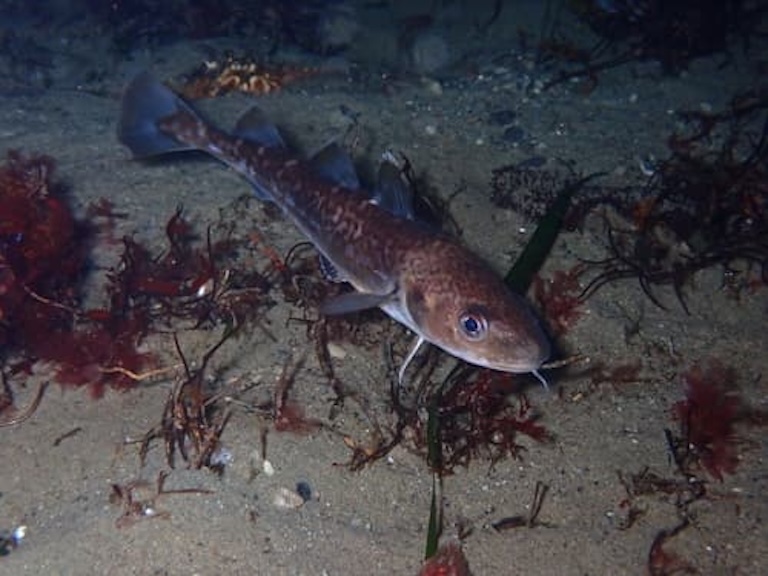
2. They have whiskers
Cod, like the Pacific cod, are bottom-dwellers, sifting through the sandy bottoms to grab crustaceans. They’ll eat fish, too, but it’s a lot easier to catch prey that can’t swim.
It is a bottom-dwelling fish, so it has bottom dwelling fishy fingers, in the form of barbels around the mouth that pick up on motion and electrical signals in the murky sediment. These sensory organs are fine tuned for predation, and allow the cods to navigate more or less in the dark. 1
3. They’re prolific.
Like all members of the family, Pacific cod spawn a lot. A single female can spawn over 6.4 million eggs, and larvae take around two to three years to reach maturity.
This creates incredible population numbers and is probably why our eating habits haven’t yet managed to wipe them out.
As for Paficic cod especially, their recorded population has just increased a lot in the wake of molecular evidence suggesting they are more widespread than was first thought.
4. They might be the same species as the Arctic cod
In 2019, it was suggested that Greenland cod and the Pacific cod are two sides of same coin.
It seems that the evolutionary history of the Atlantic, Arctic and Pacific species is a bit more of a web than a tree, with lots of hybridization, radiation, merging, separating, and merging again, and this the conclusion of this research suggests that the Pacific cod and the Arctic, or Greenland cod, Gadus ogac, are two populations of the same species.
This is just touching the surface of what can be learned about cod, as these fish are worthy of so much more recognition than they get. 2
5. They’re surprisingly social
Anyone who hasn’t actively kept or studied fish may miss the diversity of their personalities and social behaviours entirely. Fish are notoriously expressionless and often pretty dumb-looking animals, so it’s easy to assume there’s not a lot going on behind the curtain.
But to the contrary, the social lives of fish are as rich and diverse as any on land, and cod are a good example of a very social animal, often found in enormous shoals.
As migratory fish, Pacific cod move from winter spawning locations to summer foraging ones, and it’s thought that the juveniles learn these trails from their elders. It’s also hypothesised that they communicate through sound, using specialised drumming muscles. This is a fairly new revelation to science in general, and has a lot more potential for further research, but it’s certainly emerging as a common feature in fish societies!
There are hierarchies within the cod communities, too, with larger males taking dominant roles over smaller individuals, and bossing them about.
Unfortunately, this is a fish that is worryingly under-studied by behaviourists as most of the information comes from the dead ones pulled up in boats to eat. And we do eat a lot of them! 3 4
6. But they’re tasty
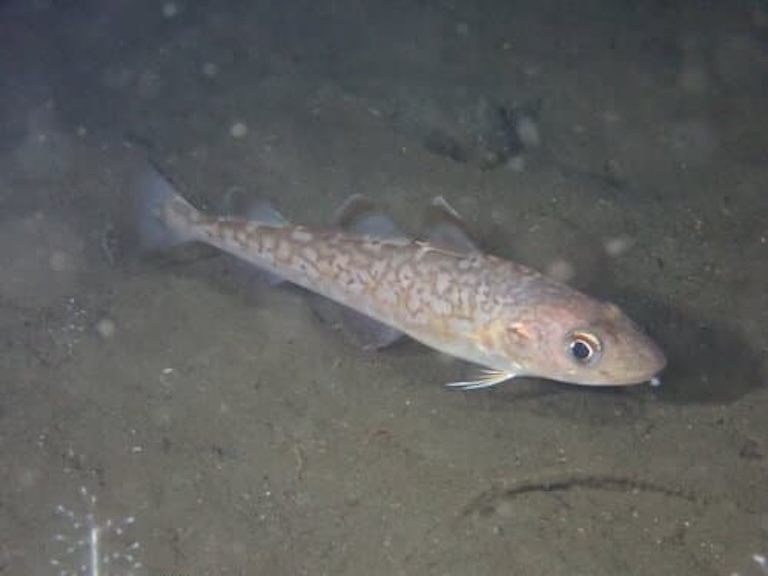
In 2024, around 23,000 tonnes of Pacific cod was recorded by US fisheries. Like its Atlantic cousins, the Pacific cod is one of primary sources of seafood for coastal communities and an incredibly popular whitefish in general.
Being highly social animals, they’re easy to scoop up in a massive trawler net, and this has traditionally been the way they’ve been caught, but it is becoming increasingly obvious to the fishing industry that this unsustainable practice will run us out of fish soon, so changes are being made.
Still, this is a fish that can grow to 23 kg when left alone, but the majority of those brought up nowadays are no more than 5 kg in weight. Stocks are said to be healthy, but that of course depends on where your incentives lie. However, in physically altering the method of catching these fish, we may have stumbled upon something that has never occurred in the history of life on Earth! 5
7. They have inspired a self-imposed limiting factor on our species!
In ecology, a limiting factor is basically something in the environment that stops you from exploiting a resource to the best of your potential. Limiting factors can be a lack of fingers, a big mountain, or anything at all, but they are defined as a restriction on your biological urge to consume as an organism, and they almost always come from outside.
That’s because life in the wild is tremendously hard, so no organism has ever evolved to slow down, as that would simply hand over the advantage to the competition. But we humans have eradicated all competition, and are left with the biological urge to consume, regardless.
This is why we’re devastating the forests, the oceans, and everything in between with our rampant consumption, but there is hope! At some point, some clever people noticed that if we keep dredging the oceans of all life just to catch the tasty fish, we’re going to run out of food. So they put in place restrictions. In some fisheries in the North Pacific Ocean and Bering Sea, cod are only allowed to be caught on long-line, not in big nets. This reduces the number of cod that a fishing boat can catch, and goes against every consumerist instinct, but is at its core, a self-imposed limiting factor. Possibly the first of its kind in the history of life on Earth.
Now, we only have to apply this to ourselves in every other biome, and we might stand a chance at saving the planet! 6
Pacific Cod Fact-File Summary
Scientific Classification
| Kingdom | Animalia |
| Phylum | Chordata |
| Class | Actinopterygii |
| Order | Gadiformes |
| Family | Gadidae |
| Genus | Gadus |
| Species | macrocephalus |
Fact Sources & References
- (2026), “Pacific Cod”, NOAA Fisheries.
- Arnason et al (2019), “Codweb: Whole-genome sequencing uncovers extensive reticulations fueling adaptation among Atlantic, Arctic, and Pacific gadids”, National Library of Medicine.
- Courtney Wilmot (2005), “Gadus morhua”, Animal Diversity Web.
- Bryan et al (2021), “Seasonal migratory patterns of Pacific cod (Gadus macrocephalus) in the Aleutian Islands”, Springer Nature Link.
- “Pacific cod”, Marine Conservation Society.
- “Pacific Cod: Science”,NOAA Fisheries.