
Pacific Coast Tick Profile
For many normal people (not us), creepy crawlies in general can be quite unsettling. Of all creepy crawlies, it’s the arachnids that seem to stimulate the strongest ick, and if we exclude spiders, it’s then the mites that do much of the heavy lifting in this regard.
Within mites, it’s the ticks that make people the most unsettled, and within ticks, it’s horrible little disease vectors like the Dermacentor genus who are primarily responsible. So, as far as creepy crawlies go, the Pacific Coast tick, Dermacentor occidentalis, is one of the creepiest and crawliest of them all!
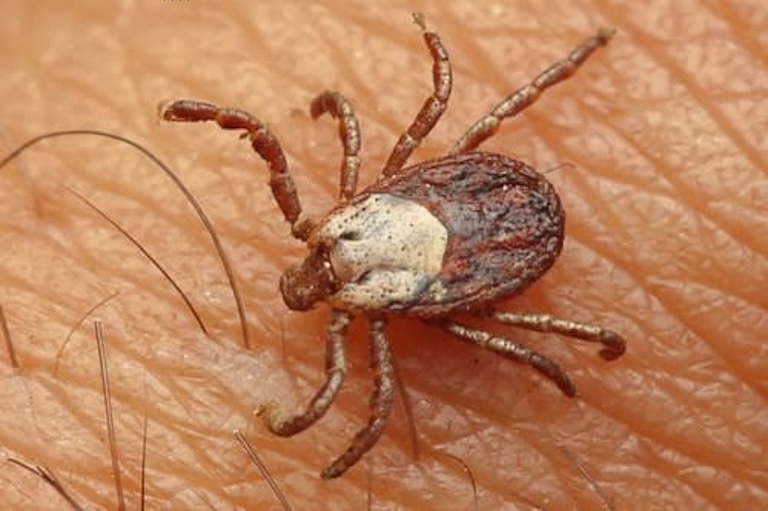
Pacific Coast Tick Facts Overview
| Habitat: | Scrubby brush habitats |
| Location: | Primarily California, extending into Oregon and Baja, Mexico |
| Lifespan: | 2 to 3 years |
| Size: | 4.5 mm when not full |
| Weight: | Not recorded |
| Colour: | Dark brown with mottled, off-white markings |
| Diet: | Blood |
| Predators: | Birds, small mammals |
| Top Speed: | Very slow moving |
| No. of Species: | 1 |
| Conservation Status: | Not listed |
Pacific Coast ticks are as unpleasant to look at as any other tick, and carry diseases that make them worthy of their reputation, but not as worthy as some of the worst offenders. They carry a slightly less damaging bacterium than their cousins in the Rocky Mountains, but it is a spotted fever nonetheless and should be considered serious.
Ultimately, these little ectoparasites are just going about their business, living their lives the only way they know how. Sadly, that means transferring wild rodent blood into humans and this is where we struggle to reconcile the situation.
Interesting Pacific Coast Tick Facts
1. They’re wood ticks
Ticks are arachnids, which means they’re in the chelicerate group of arthropods, alongside scorpions and spiders. They diverge from these other arachnids at around the subclass level, where they’re instead grouped alongside mites.
Despite mites having a bad reputation, most mites are tiny and feed on decaying plant matter, but much like mosquitoes, the entire group gets a bad rap from just a few species, and ticks are some of the most notorious in this regard.
Ticks are parasitic mites who form an order called Ixodida. There are two main families of ticks, commonly called the hard ticks and the soft ticks. These are the families Ixodidae and Argasidae, respectively (a third family contains a single exception, and a member of a mostly-extinct family, Nuttalliellidae).
Hard ticks contain around 770 known species, and are so named for the shield they wear on their heads. Both hard and soft ticks carry numerous diseases that can be transmitted to humans, but it is the hard tick group that’s most commonly found in places people frequent, and so many of these ticks are quite well-feared.
The genus Dermacentor is one with such infamy. This genus contains the Rocky Mountain tick, known for transmitting Rocky Mountain spotted fever, and its close relative, the Pacific Coast Tick.
2. Three-host hard body
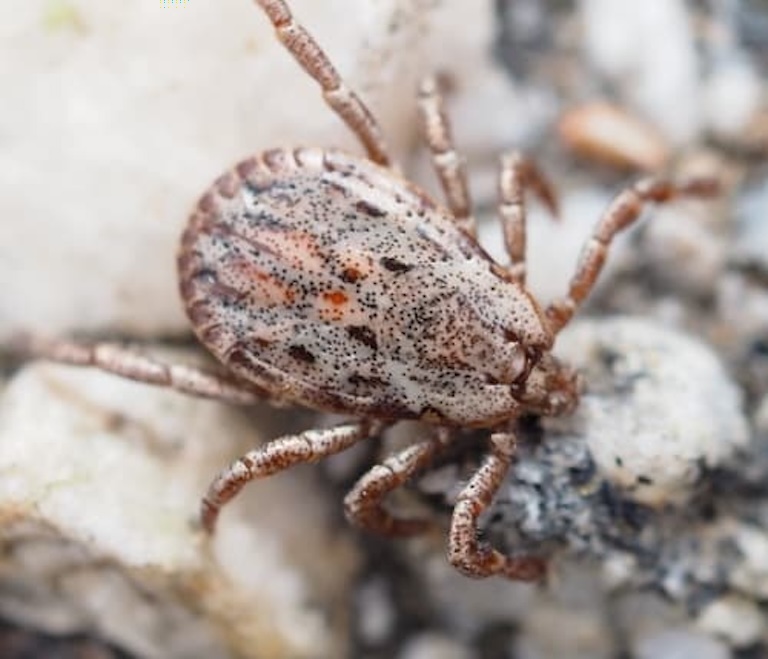
Ticks like the Pacific Coast tick, and mites in general, don’t go through the same metamorphosis that a lot of insects like flies and moths do. They have what are known as instars. This is more like the growth of grasshoppers and crickets, in that they hatch from their eggs as a tiny version of the adult, shedding a standard number of times as they grow until they reach adulthood.
Ticks typically have three stages in this process, known as the larval, nymphal and adult stages, and each stage requires a blood meal to grow into the next. For some species, this food comes from the same species of animal throughout its life. Others change species once, and are known as two-host ticks.
Pacific coast ticks are three-host ticks, and by now it should be obvious why. When emerging from the eggs, the larva only has six legs, and will be a tiny ectoparasite on small mammals like rodents. As they get bigger, so does their preferred prey, and this, unfortunately for many people, includes us.
The life cycle can take up to two years, and nymphs will strive to mature before winter, at which point they’ll go into dormancy, resuming the process in the spring of the second year. 1
3. Host species include humans
When it comes to attacks from wild animals, we prefer to tell ourselves it’s a case of mistaken identity, or a freak case of ill-prepared street food, or some other excuse to avoid the reality that something would intentionally consider us anything but divine.
Unfortunately, all animals in all ecosystems have parasites, and we are not special in this regard. A parasite is generally considered to be any organism that gains sustenance from another organism without offering it anything in return, and the Pacific coast tick most certainly fits this description. And this is an animal whose ecology includes our species as one of its official hosts.
That means that our blood has what these ticks need to sustain themselves and feed their offspring! But we’re not the only ones. Baby ticks often feed on rodents and other small mammals, but birds can be hosts, too. Adult ticks are commonly found on large mammals like cattle, horses and deer. They’ll also bite cats and dogs, which is one of the ways they’re often brought into the home, but there’s no avoiding it: we are their natural prey!
4. They use our blood to make babies
Mosquitoes are some of the most hated animals on the planet, which is a little unfair as a generalisation since they are almost all nectar feeders. Only a few species suck blood, and almost all of those only do it when they’re female and carrying eggs.
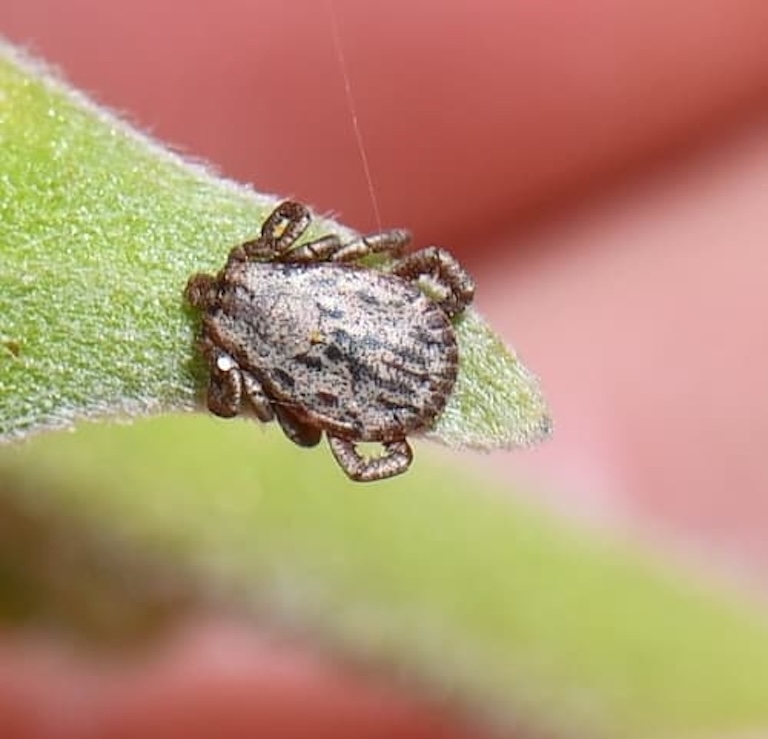
Ticks, on the other hand, are purely blood feeders by nature, and the Pacific Coast tick uses the blood of vertebrates as a source of hydration and nutrition, both for itself and for its eggs. Males typically don’t swell up to enormous proportions, but they will still latch on for a suckle, which again makes them a lot worse than mosquitoes.
The females are the ones that get huge, and they do this when breeding, but all stages and sexes of the Pacific Coast tick can feed on humans.
Primarily, though, it’s the mature females who latch onto human legs and crevices, become engorged, feed their eggs and then detach to lay them somewhere in the grass. Then, mercifully, they die. Unfortunately, not before releasing multiples of themselves into the wild to continue this process.
The larvae, though, aren’t much of a problem. 2
5. They’re not born with diseases
Ticks are an issue because of the pathogens they spread between hosts. But they don’t create these pathogens, they pick them up in their diets. As such, when the tick larva hatches, it’s free of disease until at least its first meal.
Being generalist blood-feeders, they are able to feed on both mice and men – and that’s the issue when it comes to what makes species like this tick so unpleasant. 3
6. But they can become very dangerous
The Pacific Coast tick, like its close relative, the Rocky Mountain tick, is a vector of some pretty horrible diseases. They can pick up viruses, bacteria, and other nasties from their rodent and deer hosts and carry them into the human bloodstream.
One of the most worrisome examples of this is the bacterium Rickettsia phillipii, which is a member of the Rickettsia group of bacteria known for Pacific Coast tick fever and Rocky Mountain spotted fever. The latter is the more dangerous of the two, making the Pacific Coast tick less medically significant, but the condition is still considered moderately severe and should be treated with antibiotics.
Up to 11% of these ticks carry this bacterium, and it is a very common species implicated in bites on humans, making them a very common vector of the disease.
But it is not one of the worst. As mentioned, Rocky Mountain ticks carry much worse, and the unrelated Ixodes pacificus or Western black-legged tick is the primary vector for the infamous Lyme disease in the same region.
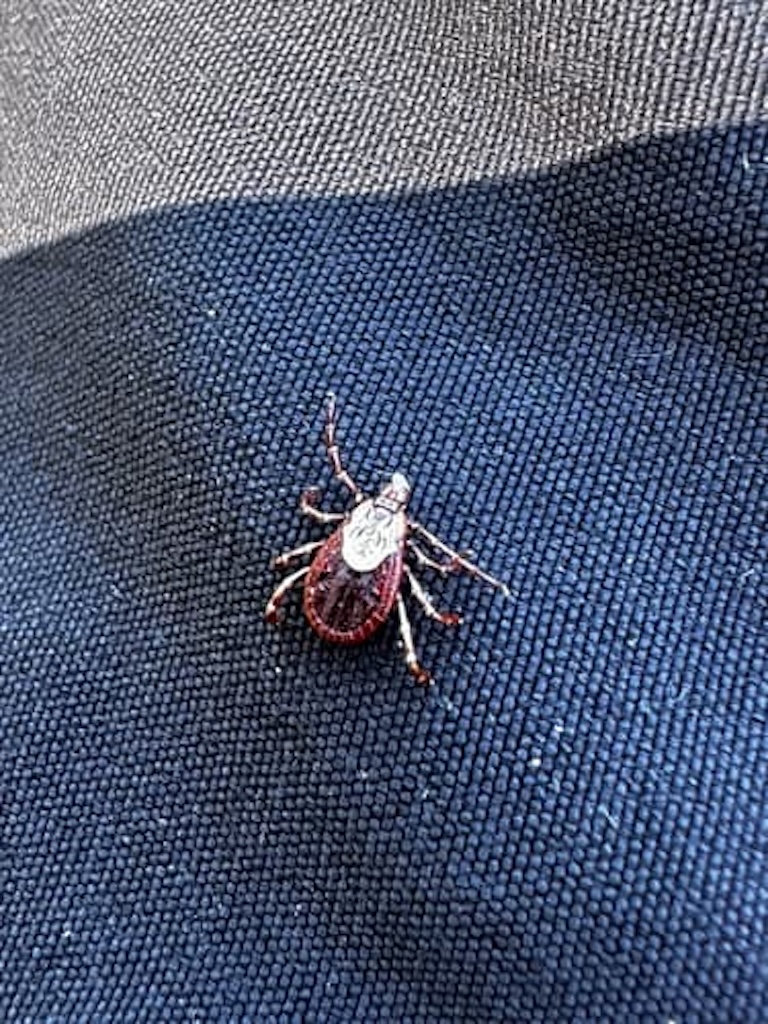
Pacific Coast Tick Fact-File Summary
Scientific Classification
| Kingdom | Animalia |
| Phylum | Arthropoda |
| Class | Arachnida |
| Order | Ixodida |
| Family | Ixodidae |
| Genus | Dermacentor |
| Species | occidentalis |
Fact Sources & References
- , “Oregon Hard Tick ID”, Columbia Drainage Vector Control.
- (2023), “Tick Biology”, San Mateo County Mosquito and Vector Control .
- (2025), “Pacific Coast tick”, Colorado Tick-Borne Disease Awareness Association.