
Papillion Dog Profile
Since the 16th Century, there has been a fluffball of incredible wit, charm and agility, relegated mostly to sitting on the laps of the elites.
Contemporary sources describe them as “Smart little Velcro dogs”, and while the frilly knickers have gone out of fashion since their arrival on the scene, thankfully the frilly ears have not. Today, Papillion dogs are considered much more than a fashion accessory, which is a huge step in the right direction; with any luck, it will be charismatic breeds like this that will finally contribute to shedding the insulting concept of “toy dog” for good.
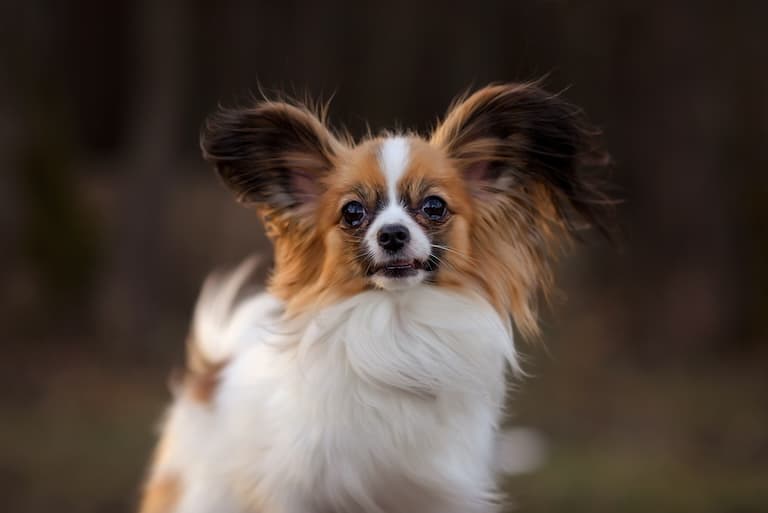
Papillion Dog Facts Overview
| Habitat: | Domestic |
| Location: | Worldwide |
| Lifespan: | Up to 16 years, usually around 14.5 years. |
| Size: | Up to 30 cm tall (11 inches) |
| Weight: | Up to 4.5 kg (10 lb) |
| Colour: | Usually white with brown to black markings on face, ears and saddle |
| Diet: | Mini Kibble |
| Predators: | A large eagle could probably eat one but no natural predators |
| Top Speed: | Nippy! |
| No. of Species: | 1 |
| Conservation Status: | Not listed, domestic breed |
Papillion dogs aren’t a breed, but a subtype of the Continental “toy” spaniel. They’re intelligent, densely personalitied, fast, attentive and energetic.
As with all dog breeds, these incredible strengths can easily be misdirected into disastrous weaknesses without proper care and attention, and the archaic misnomer of ‘toy’ does nothing to alleviate this risk.
Interesting Papillion Dog Facts
1. Butterfly spaniel
The Papillion isn’t a species of animal, nor even its own breed of dog. It’s not even a type of a breed of dog, and is, in fact, a subtype of a type of a breed of dog.
Papillion is the French word for butterfly, and among the breeds of dogs known ruefully as the Continental toy spaniels. These are, obviously, spaniel-type dogs, and are bred for their tiny size. Continental toy spaniels come in two main flavours, and pretty much the only difference is that one of them has large, hairy, erect ears that give its head a bit of a butterfly appearance.
The floppy-eared variety is known in French as the Phalène, which means moth.
In the 16th Century, when selfies took several days to paint and only the absurdly wealthy could afford them, such flamboyant toffery was accompanied by a wave of frilly animals used to accessories. Glamourous women whose outfits presumably required a whole toileting team on payroll, are depicted sitting pompously on expensive chairs, holding papillion dogs on their laps.
The Papillion, in modern records, was recognised in the US in 1935, and while the institutionalised slur toy remains in contemporary circles, the Papillion dog has at least earned some respect for their wit and agility on top of their cute appearance1.
2. Eight inches of agility
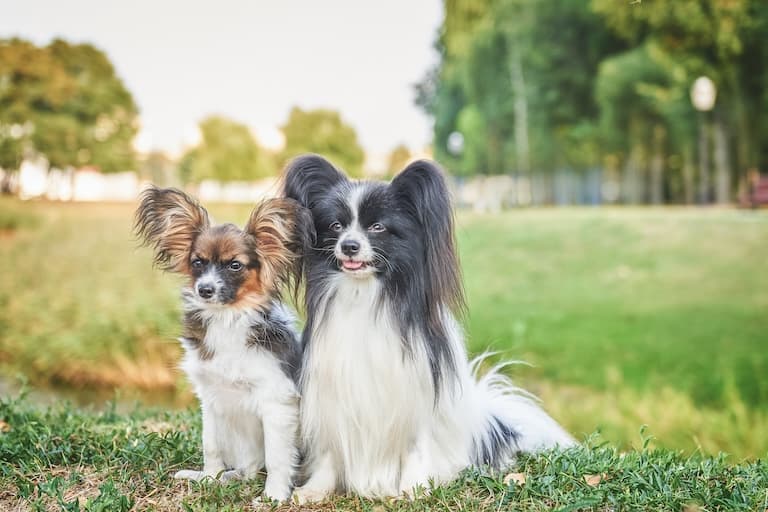
There’s no denying how cute these dogs are, but despite having very short legs, Papillion dogs are becoming quite popular for their incredible ability to move them very fast.
They’re not only fast, but agile! Papillions have commonly scored highly in agility competitions, and can be seen having a wonderful time while doing it. They are known to be enthusiastic about running, jumping, and learning – the latter being tied to one of their other unusual qualities.
3. High intelligence
For a dog with such a small head, it’s not common to find this level of smarts. Papillions are said to be easy to train, attentive, and quick-witted.
They are said to bond strongly with a very small number of people, so can struggle with attachment, but this bond also lends itself to their trainability.
4. They have no undercoat
One very big perk when it comes to housing one of these little nippers is their low shedding. The Papillion’s lack of undercoat means they don’t release the copious amounts of hair that other breeds do, which reduces cleaning and allergies, but they’re not totally free from maintenance.
The long hair on the dog requires care, and so this is considered a moderate-maintenance dog, somewhere between a Puli and an actual stuffed toy dog.
And, while we’re on the topic, sometimes it’s worth exploring the differences between a stuffed animal and a real one2.
5. They’re not a toy
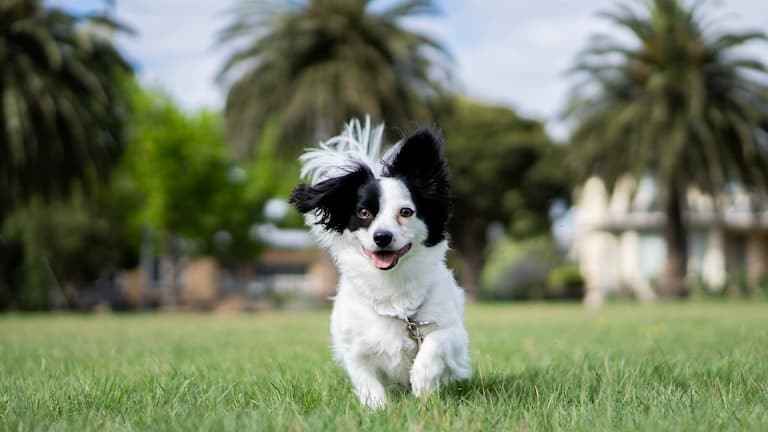
At the risk of beating this topic into the ground, despite the name, each Papillion dog is a sentient, opinionated individual with desires and needs, and not a status symbol or trophy. The fact that the industry still enjoys using the word “Toy” to describe these animals is a clear indicator of their lack of respect for this concept, but this doesn’t mean we all have to follow suit.
Being an animal with its own mind and biological body, each puli may exhibit one or more of the following conditions: Excessive barking, separation anxiety, fragile bones, destructive behaviours towards furniture.
These are all symptoms of either their genetics – which, for the dogs are said to be relatively healthy in general – or the husbandry of the animal. Those who consider buying animals based on how they make the owner look are more likely to experience bad behaviours, while those who are looking for a compact companion to learn from as much as they teach, will fare much better3.
Papillion Dog Fact-File Summary
Scientific Classification
| Kingdom | Animalia |
| Phylum | Chordata |
| Class | Mammalia |
| Order | Carnivora |
| Family | Canidae |
| Genus | Canis |
| Species | lupus familiaris |
Fact Sources & References
- Racheal D. Kemmerer (1999), “A Brief History of the Papillon”, Papillon Club of America.
- “Papillon”, Royal Kennel club.
- (2017), “Dogs are neither toys nor cuddly playthings”, AuFuret.