
Palm Warbler Profile
Bird naming has always been the pursuit of the neurologically eccentric. There are great tits, superb starlings and exclamatory Paradise whydahs to sift through before you can find anything remotely sane.
So, at a glance, the palm warbler is an unusual deviation from the norm. A sensible, comprehensible, unpretentious animal that does what it says on the tin. But that would be too easy! No, this is not a palm bird, nor (arguably) is it a warbler. But it is cute and remarkable, despite the name.
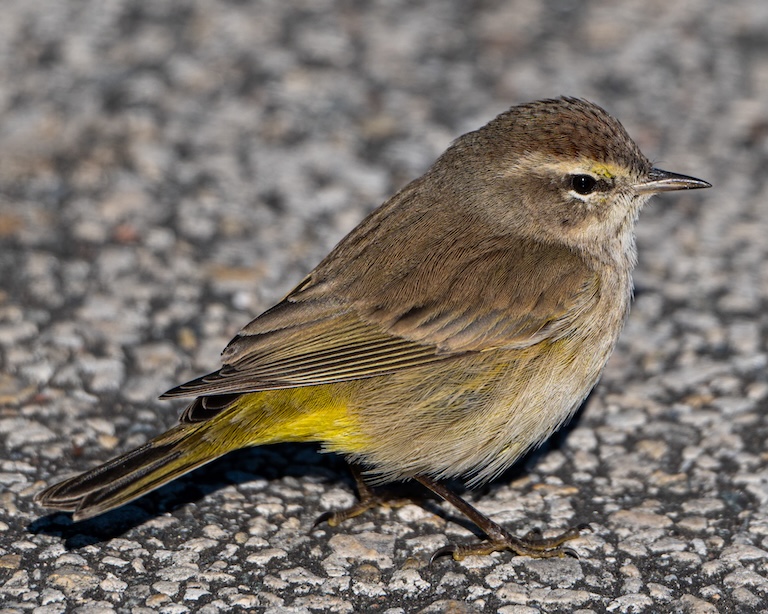
Palm Warbler Facts Overview
| Habitat: | Freshwater terrestrial, grasslands, scrublands, forest |
| Location: | Eastern North America, Central America, West coast of North America |
| Lifespan: | Likely up to around 7 years |
| Size: | 12–14 cm (4.7–5.5 in) |
| Weight: | 8.5–14.2 g (0.30–0.50 oz) |
| Colour: | Brownish-olive upper parts and thoroughly yellow underparts with bold rufous breast; less yellow in the western subspecies |
| Diet: | Insects and berries, sometimes nectar |
| Predators: | Jays, raptors, snakes and weasels |
| Top Speed: | Not reported |
| No. of Species: | 1 |
| Conservation Status: | Least Concern |
Palm warblers are New World warblers, so unrelated to the larger warbler family. They’re in the genus of small, migratory Central. American birds, but one that has expanded its range well into North America and further north than any of its kind. Palm warblers are some of the most successful birds in the Americas, and they’re just getting stronger.
Interesting Palm Warbler Facts
1. Warblers
When the cultish rejects from Europe crossed the Atlantic in search of liberty from criticism, they began naming animals based on the ones they had seen at home. This is fine, but it’s led to some confusion in common names (the same thing happened in Australia).
Warblers, traditionally, are a huge group of 400 species in around 70 genera from the Old World. They share nothing taxonomically in common with the New World warblers, but they look similar.
So, the palm warbler, being from the New World, is a pretty little member of a pretty little family of New World warblers. There are about 120 species in this family, and like their namesakes, they’re small, cute, and insectivorous.
One genus, Setophaga, has 34 species in it. Most of these are migrants and spend a lot of time in Central America. The palm warbler is in this genus, but is quite exceptional in that it has a tremendous range instead.
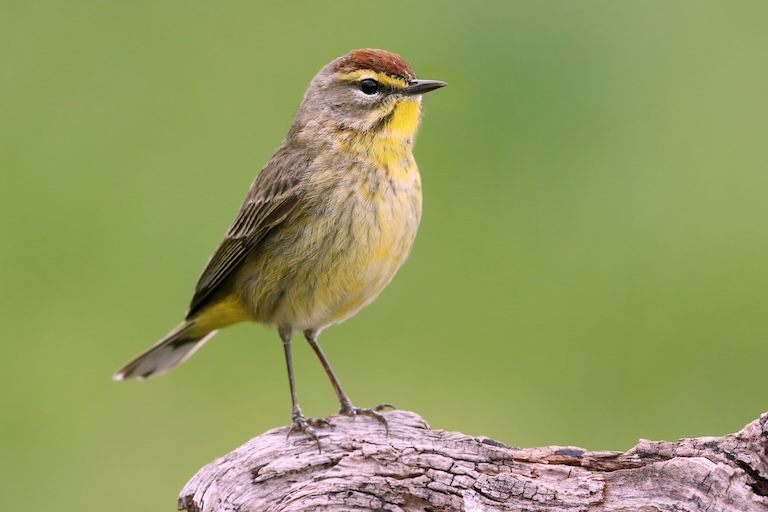
2. They have a very vast range
Palm warblers are indeed found in Central America, but they’re also found in much America north of that, too. There are two subspecies, the western and the eastern, which should be self-explanatory, only that they seem to migrate across one another in the opposite direction.
The western palm warbler breeds around the west coast of North America, then migrates diagonally southeast to Florida for the summer; the eastern does something similar in reverse, overwintering in Texas and down into Central America.
Between the two, they have a range of around 13 million square kilometres when not breeding and an additional 6.5 million square kilometres in total! They are said to be the most northerly breeding of all the New World warblers. 1 2
3. They bob their tails
One of the clearest ways to identify this warbler among its close relatives is by looking at its butt. The palm warbler bobs its tail almost constantly, which sets it apart from look-alikes and fortunately didn’t land it with the name “wagtail” which would have been another Old-World naming complication!
This bobbing is said to be a signal of alertness, showing potential predators that they have sharp reflexes and would make a difficult meal. This seems like a good guess, but there are several others as well. One suggestion is that it camouflages them against moving water, where they spend a lot of their foraging time.
In fact, given how confusing the warbler part of this bird’s name is, it’s easy to overlook the palm part.
4. They don’t care for palms
The name Palm Warbler refers to a bird that isn’t a (true) warbler and doesn’t live or feed around palm trees.
Where it came from, nobody seems to know for sure, but given how easy it should be to name a bird (the Fluffy-backed Tit-Babbler comes to mind), this species was clearly named at 4:55 pm on a Friday.
It’s said that the first species sampled were gathered in the Caribbean, which might explain the name, but since then the species has been recorded in their millions all over North America. And they are impressively abundant birds.
5. There are loads of them
Vertebrate populations almost all seem quite small when compared with ours, but we’re not really doing this whole reproduction thing very sustainably and we will inevitably be reduced to a healthier figure by one of the many possible limiting factors our planet has to offer.
In the wild, though, vertebrate populations often number in the tens or hundreds of thousands, so a bird with a population of 13 million (that isn’t a farmed chicken) is really quite astonishing.
Yet, here we are! The palm warbler population was estimated at 13 million all the way back in 2020 and rising at a rate of over 50% over the previous decade.
As such, they are listed as Least Concern by the IUCN and were probably one of the easiest assessments to complete.
This incredible population is certainly large, but for perspective, the American robin has around 250 million individuals, so they have some way to go before they can reach the top! 3
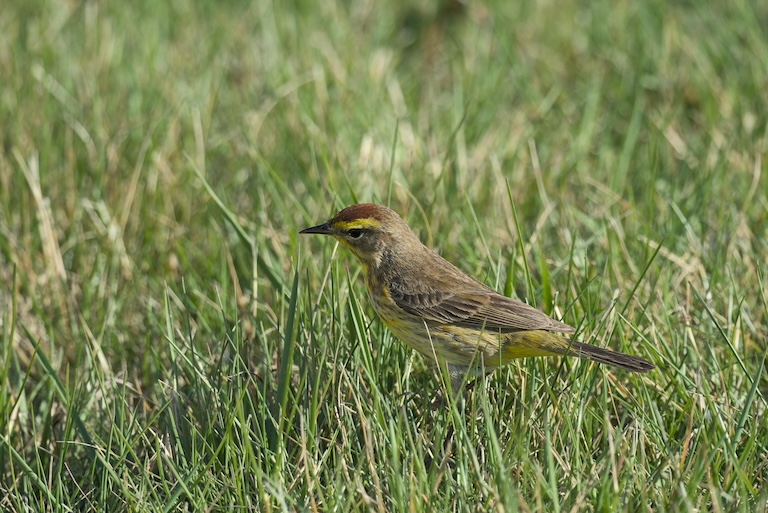
Palm Warbler Fact-File Summary
Scientific Classification
| Kingdom | Animalia |
| Phylum | Chordata |
| Class | Aves |
| Order | Passeriformes |
| Family | Parulidae |
| Genus | Setophaga (sometimes labelled Dendroica) |
| Species | palmarum |
Fact Sources & References
- , “Palm Warbler”, Audubon.
- , “Palm Warbler”, Data Zone by Bird Life.
- (2020), “Palm Warbler”, IUCN Red List.