
Poodle Profile
If you were to pick an animal that was the antithesis of the animal blogger, you’d have to pick something cute, fit, adored by women everywhere, and much smarter than they look.
You’d describe something good-looking, athletic, with a strong attention span; charismatic, and with really a lot more hair than it needs. Approachable in parks, hypoallergenic, and not remotely covered in fleas.
No need to run this joke into the ground: it’s a poodle. You’d be describing a poodle.

Poodle Facts Overview
| Habitat: | Domestic |
| Location: | Worldwide |
| Lifespan: | Up to 18 in smaller variants, around 13 in the larger variateies |
| Size: | Standard: up to 61 cm (24 in); Mini: Up to 38 cm (15 in); Toy: under 25 cm (10 in) tall |
| Weight: | Standard: up to 32 kg (70 lb); mini up to 6.8 kg (15 lb); toy: up to 2.7 kg (6 lb) |
| Colour: | Usually solid, almost all dog colours: black, white, grey, brown(s), “blue” |
| Diet: | Poodle noodles |
| Predators: | Dog shows |
| Top Speed: | Up to 48 km/h (30 mph) |
| No. of Species: | 1 |
| Conservation Status: | Not threatened |
If there was ever a dog breed whose intelligence was overlooked in favour of its novelty, it’s the poodle. Toy poodles, in particular, endure perhaps the most insulting haircuts of any dog breed, with the abominable “continental clip” bordering on institutionalised animal abuse.
These dogs are best known as show dogs, and that’s just tragic, as they’re also athletes, hunters, problem-solvers and remarkably sharp-witted companions who deserve better recognition!
Interesting Poodle Facts
1. They’re water dogs
Poodle origins are murky, perhaps because all research is hindered by the “OMG SO CUTE” response that they trigger in people. It’s widely believed that they originated in Germany in the Middle Ages, which was a time when Germany (though it wasn’t Germany then) was a jumble of changing organisations in the wake of the fall of the Roman Empire. Others say they come from France, and others still say they’re Russian, but the name suggests
But far from being Germany’s emotional support animal in these trying times, it was bred as a water dog – a dog whose role was to run into ponds and rivers to collect game.
This is not a role that’s commonly spoken of nowadays, as it’s covered in the wider scope of a retriever, but water dogs were the original retriever archetype, and poodles are perhaps one of the very few still in existence today1.
2. There are four main subtypes
Some kennel clubs don’t recognise the Medium Poodle as a formal breed, but poodles are widely grouped into Standard, Medium, Mini and Toy, with the difference being shoulder height.
Standard poodles are around 60 cm tall in large examples, and can weigh over 30 kg. The lower end of this range are the toy poodles, commonly reaching no more than 25 cm tall and two or three kilograms.
But poodle appearance is overrepresented on the internet, it’s time to talk about their other impressive traits2 .

3. They’re surprisingly fast
Poodles have so much more going for them than just their cuteness.
The 2026 Westminster dog show was wowed by a poodle, who won awards for agility and was worthy of his own blog post as a result. But this isn’t anything new for poodles, and the same show crowd was enthralled by a different poodle just the year before.
Poodles are fast, agile, and patient dogs who do well with both cognitive and physical puzzles. In fact, they’re a lot smarter than most people realise3.
4. They’re surprisingly smart
Poodles are victims of a similar fate that human women have been complaining about since Mary Wollstonecroft. People take one look at them and want to cover them in ribbons and squeeze their fluffy bums and pay no attention to just how bright and competent they are when not being groped and infantilised.
It’s common knowledge that the border collie, a sharp, hard-working, man’s man of a farm dog is one of, if not the smartest purebred dog on record, but a top contender – and, many would say, a superior one – is the poodle.
The dog exposed to the most humiliating of haircuts for judges who look like Edna Mode, is perhaps the most brilliant mind of any single dog breed. Poodles are alarmingly clever animals, not only ranking highly in problem solving, but in emotional intelligence, too. This is presumably how they’ve endured such fashion abuse without biting our faces off.
Remember, before they became fluffy toys for rich folks, these dogs were working dogs, like the collies, and so they come from smart stock. Well, most of them do, anyway4.
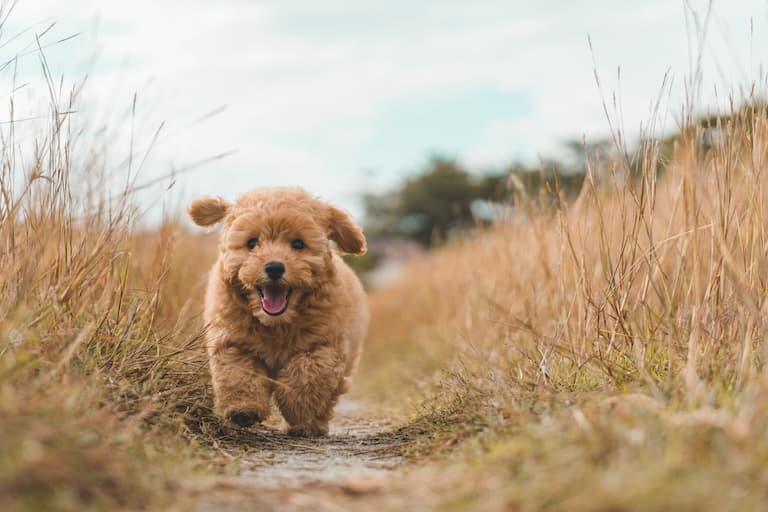
5. Mostly
In humans, females are typically 15% smaller than males, but this is quite a small effect nowadays. Our ancestors, three million years ago, had closer to 30% or even 50% size dimorphism between the sexes. Chances are, the same urge to pick something cute and make it smaller relates to this effect, but that’s a job for the anthropologists – what we have done to poodles cannot be excused as the passage of Darwinism!
Toy poodles are the product of rich folks wanting a dog they can fit into a Gucci bag, and they have come from a long period, since the 20th century, of breeding very unhealthy animals to this end. Over time, there emerged a toy-sized poodle that wasn’t misshapen, filled with rage, or brutally disfigured, and retained the proportions of the larger poodle.
Further efforts to create an even smaller “teacup poodle” resulted in similarly tortured abominations and were called off.
This process is unconscionable as it creates tremendous suffering for nothing more than a fashion accessory. It is arguably worse than the fur trade in this regard, and toy poodles, though formally recognised, are considered less robust, genetically, than their larger counterparts.
They’re also dumber. Smaller brains, dodgy genes, and all the rage of a fall from grace, should make the toy poodle a perfect candidate for small-dog-syndrome, but they still hold up remarkably well against other breeds of their size, and are well regarded as very clever for their size. Maybe not as alarmingly sharp as a full-sized poodle, but pretty impressive, regardless.
6. Poodles as pets
Being cute, smart, and – now – handbag sized, the poodle has something to offer for everyone, so it’s no surprise that this is one of the most popular pet breeds.
Poodles are generally considered to be quite hypoallergenic, and a lot of this has to do with their hair, which doesn’t shed much and instead continues to grow longer and longer. Their thick, curly coats can become matted easily, so they need grooming every month or two.
It’s also worth noting that while they’re considered hypoallergenic, detailed research into this fact hasn’t supported it with any evidence.
All in all, though, this is thought to be a friendly, non-aggressive dog that’s easy to train and makes a medium-maintenance companion in the home.

Poodle Fact-File Summary
Scientific Classification
| Kingdom | Animalia |
| Phylum | Chordata |
| Class | Mammalia |
| Order | Carnivora |
| Family | Canidae |
| Genus | Canis |
| Species | lupus (familiaris) |
Fact Sources & References
- (2017), “Judie Amyot: Gone like the Dodo”, The Suburban.
- “What Is a Moyen or Klein Poodle?”, Peterson Poodles.
- Samantha (2026), “The Westminster Dog Show Has a New Diva and His Name Is Gerard”, them.
- (2024), “Why Poodles are One of the Smartest Breeds”, fitwarm.