
Pyrosome Profile
Sea Squirts are more than just a cool name for a basement cinema in Leicester Square – these are some of our weirdest relatives. Diverging from us as far back as the invention of the notochord, these tube-like, worm-like, almost vegetable-like animals are nothing of the sort: they are chordates. Like us! But so, so, not like us.
One family of this weird group are close relatives of the salps, and often known as fire salps, or Pyrosomes. And they’re some of the most alien members of our phylum.
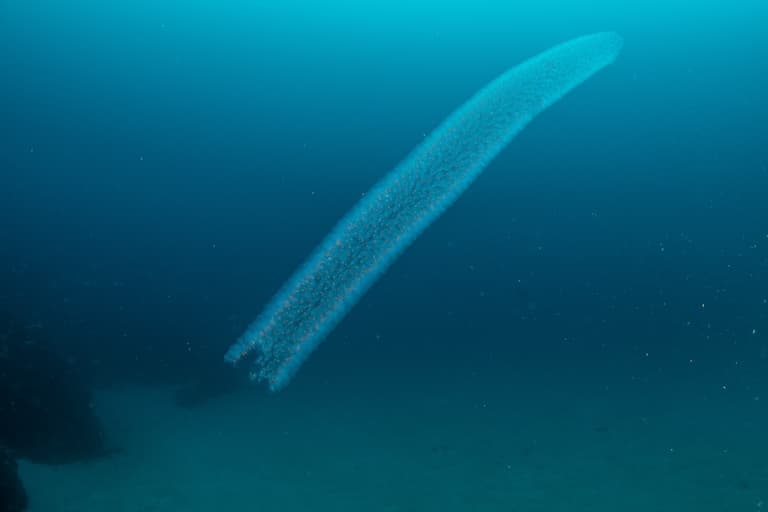
Pyrosome Facts Overview
| Habitat: | Mostly in the photic zone of warm marine biomes |
| Location: | Worldwide; mostly tropical and temperate seas |
| Lifespan: | Unknown |
| Size: | Up to 18 m (59 ft) colony |
| Weight: | Unknown |
| Colour: | Often Pink to reddish, translucent; sometimes blue-green |
| Diet: | Planktonic organisms and nutrient matter |
| Predators: | Sea turtles, fish, sea stars |
| Top Speed: | Planktonic – they move with ocean currents |
| No. of Species: | 8 |
| Conservation Status: | Not Listed |
Interesting Pyrosome Facts
1. They’re chordates
We humans occupy a phylum of vertebrates known as chordates. Most of them, at least those we’re most familiar with, have a spine. We do, monkeys do, rats, bats and cats do, as do all fish (not shellfish), snakes, birds and lizards.
All of these animals descend from a primordial ocean ancestor that developed the early stages of a spinal column by way of an elastic, rod-like structure called a notochord. In animals with spines, this notochord only exists briefly in the womb, and is replaced with the vertebrae of the spinal column before the animal is born.
But in some of the most primitive of our relatives, there is no spine, only notochord. Arthropods and molluscs are the only two phyla more populous than the chordates, and at a glance, pyrosomes definitely appear more mollusc than human.
But they aren’t! These jelly worm-like things descended from the same little jelly nub with a notochord that we did, perhaps as long ago as 600 million years. Pyrosomes are members of a branch of chordates called Tunicates, and while most of animals like it are stuck to rocks, these ones float about like jellyfish, perhaps yearning to follow in our footsteps1.
Of course, we are the ones who should be imitating them.
2. Return to Pyrosome
It seems that all of modern society has been built with the goal of doing less. We have an inherent drive to automate our daily lives so we can spend more time doing very little at all, and ironically, we spend so much time striving for this that we end up doing more.
But it is in our DNA to be couch potatoes – just look at pyrosomes. These guys are filter-feeding chordates, some of the laziest of our kind. And they have thrived using this strategy the whole time that we went off evolving fins and limbs and lungs, feet, bikes and nectar points. And who’s winning exactly? Pyrosomes don’t worry about mortgages, they just sit in the water column, benefitting from the chaos that misguided animals above them cause with their daily struggles.
As scales, blood, poop, and all kinds of other delicious matter sinks into pyrosome turf, they happily gobble it all up. And you can’t help but wonder if that’s what we should really be doing.
But as we humans become more individualistic over time, we are moving in the wrong direction. Because pyrosomes, as simple as they are, are some of the best team players in the animal kingdom.
3. They’re colonial
We’re pretty social creatures, in general, but sociality in our kingdom is a spectrum. Cats are less social than dogs, but still love a bit of a scratch behind the ears and a cuddle; crocodiles are less inclined to appreciate this, but will look after their young; many amphibians will only tolerate one another when it’s necessary to share gametes.
But sociality goes the other way, too. Rabbits are more social than humans, sharing enormous family groups; naked mole rats embody ant-like colony structures in their societies with reproductive divisions of labour; and pyrosomes go so deep into sociality that they are physically connected to one another by necessity – each member provides the equivalent of a cell or organ to a larger, colonial organism.
That means the pyrosome isn’t a single thing, it’s the collection of thousands of smaller single things, all working entirely together. And these individual things, called zooids, are very much like individuals. They have multicellular bodies, organelles, and all the inner workings of a single being, but they are so highly specialised they can’t survive on their own and need to be part of the colonial organism to live!
4. They move
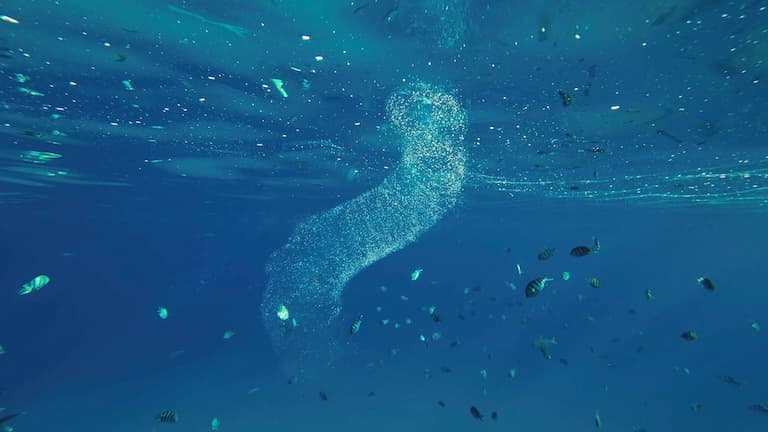
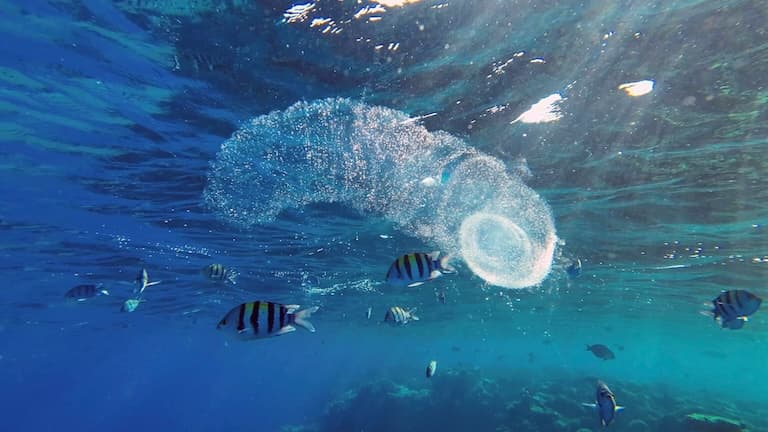
Pyrosomes have several common nicknames, but one of the most fun is “Sea pickle”. This refers to their shape, which is essentially a long cylinder, and each of the individual zooids makes up part of its structure. The mouth of the zooid faces outwards, the butt faces inwards, and each tiny animal sucks in water and sends it through into the centre of the cylinder, where nutrients can be extracted and shared among them.
But despite all this complexity, pyrosomes are considered planktonic.
Plankton is a word we mostly use to describe all the tiny miscellanea that float about in the water and get eaten by whales. But it technically refers to a mean of locomotion. Plankton is characterised by being entirely, or almost entirely, at the mercy of the ocean currents. That means it can be as big as you like, and if it can’t swim and isn’t fixed to a surface, it’s plankton.
Pyrosomes are a perfect example of monster plankton, growing up to an alarming 18 metres and relying primarily on the flow of water to get around. But they do have a very small amount of control. Individual zooids can coordinate to rotate and position the colonial organism and can move very slowly through a system of squeezing and the beating of cellular hairs called cilia2.
5. They perform a Mexican wave
One cool thing many planktonic animals are that they can glow in the dark. There are several mechanisms of bioluminescence in the animal kingdom, but most of them in the ocean require special chemicals called luciferin and luciferase to combine and emit the light.
Pyrosomes do it a little differently, though. They have a pair of special organs on the outer layer of the organism which are packed with bacteria, and it’s the bacteria that produce their light. The mechanism isn’t well understood, neither is the taxonomy of the relevant bacteria, but it’s thought that these little sing-celled organisms go about their daily lives inside the cells, producing light as a by-product of their metabolisms. The organelles that house them are then responsible for opening and closing the curtains, so to speak, to allow or prevent this light from leaving the pyrosome.
When pyrosomes glow, it happens as a ripple, propagating from one zooid to the next, as each responds to the light released from its neighbour3.
But why?
Well, this is one of the ocean’s countless mysteries, and a great incentive to get into marine biology!
6. They’re hermaphroditic
Colony organism reproduction is weird, and riddled with jargon, so it can be difficult to simplify! Pyrosomes are both male and female, though, which makes it easier for them. When they reproduce, they release an egg, which spends a very brief time as an egg, before turning into a “bud”.
These buds clone themselves into a second generation of buds that can reproduce sexually, as well as cloning, and specialised zooids begin to form. The production bud is called the cyathozooid, or nurse, and from there, we get three distinct specialists. All three are called blastozooids because they are produced by budding, but they are all distinct:
Trophozooids are responsible for feeding the colony;
Gonozoids are responsible for exchanging the sex cells between their colony and the next;
And Phorozooids are the transporters of the Gonozoids.
There are many more types of zooid, most are less specialised, and they’re all produced at these early stages. At least 800 blastozooids can be produced from a single cyathozooid, and they begin life as free-floating animals, coming together later to form colonies. Colonies themselves have both male and female gonads and can self-fertilise if they get lonely!4
7. They’re horrifying
Humans are quite frightened of leopards. And that’s reasonable, given that leopards have been hunting humans since the moment human ancestors decided to set foot on the ground. But a leopard is typically slightly smaller than a human, at around 30 kg, and is therefore punching up in regards to its predator/prey ratio.
The largest predator of humans today, at least on land, would be a polar bear: up to 750 kg of terrible meat that has a predator to prey ratio of around 10:1 against a 75 kg human5.
Pyrosomes are predators, too. And they most definitely do not punch up. Their predator to prey ratio is somewhere around 50 million to 1.
Most of their food is dead on arrival – bits and pieces of nutrient matter sheared off from some monstrous encounter elsewhere; but pyrosomes also feed on tiny organisms, and will graze on a wide variety of prey in this way. This, no doubt, makes them very significant to the ecosystems they inhabit, yet their ecology remains very poorly understood6.
While most pyrosomes are in the 10 cm to 30 cm range, some giant pyrosomes have been documented measuring more than 18 metres long, which brings them into the category of predator we, too, might start to worry about, especially considering the largest great white in the ocean is unlikely to be more than half of that length.
Pyrosomes, too, provide food for larger animals. Over 60 species of animal have been documented eating them, on purpose, to meet their caloric needs7.
8. They bloom
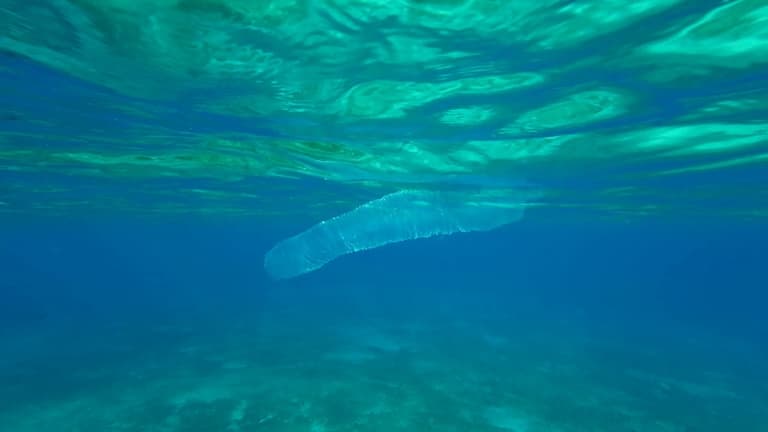
Pyrosomes, like jellyfish, exhibit a natural bloom cycle that’s still not very well understood. And like jellyfish, changes in the densities or locations of these blooms are a potentially worrying symptom of a larger issue.
Warming ocean temperatures are causing all sorts of dangerously unpredictable natural phenomena that threaten to accelerate our suicidal climate rampage8. So, pyrosomes may well be harbingers of doom – our dormant ancestry lurching into our existence to remind us all that we need to slow down, and to return to pyrosome9.
Pyrosome Fact-File Summary
Scientific Classification
| Kingdom | Animalia |
| Phylum | Chordata |
| Class | Tunicata |
| Order | Thaliacea |
| Family | Pyrosomatida |
| Genus | 3 genera |
| Species | 8 species |
Fact Sources & References
- Piette & Lemaire (2015), “Thaliacean”, Chicago Jounals.
- Guo (2019), “See the giant ‘sea worm’ filmed off the coast of New Zealand”, National Geographic.
- Mackie & Bone (1978), “Luminescence and Associated Effector Activity in Pyrosoma (Tunicata: Pyrosomida)”, JSTOR.
- Piette et al (2025), “Thaliaceans, The Neglected Pelagic Relatives of Ascidians: A Developmental and Evolutionary Enigma”, The University of Chicago Press Journals.
- Berkson (2024), “The Mysterious World of Pyrosomes”, Ocean Conservancy.
- Thompson et al (2021), “Host-specific symbioses and the microbial prey of a pelagic tunicate (Pyrosoma atlanticum)”, Pub Med Central.
- Lilly et al (2023), “A global review of pyrosomes: Shedding light on the ocean’s elusive gelatinous “fire-bodies””, Association for the Sciences of Limnology and Oceanography.
- Halfter, “Pyrosomes as messenger for warm water in the Southern Ocean”, The Australian Antarctic Program Partnership.
- Berkson (2024), “The Mysterious World of Pyrosomes”, Ocean Conservancy.