
Quarter Horse Profile
In the developed world, it can seem as though only horse people and gamblers are all that influenced by horses. Dig a little deeper, though, and the human bond with the species is so prehistoric and fundamental to our culture that each country carries its unique attachment to a breed or two. Jethro Tull sang of Britain’s heavy horses, and Mick Jagger measured his resolve against multiple wild ones.
Lady Godiva is still living down the slander of a fictional wardrobe malfunction upon a horse, even 1200 years later.
In the United States, though, that affinity isn’t rooted in the slow economy of plough horses or the provocative urban transport of a nude noblewoman. What Americans value (to everyone’s detriment) is speed, agility and explosive acceleration. And by those metrics, few breeds are as compelling as the American Quarter Horse.
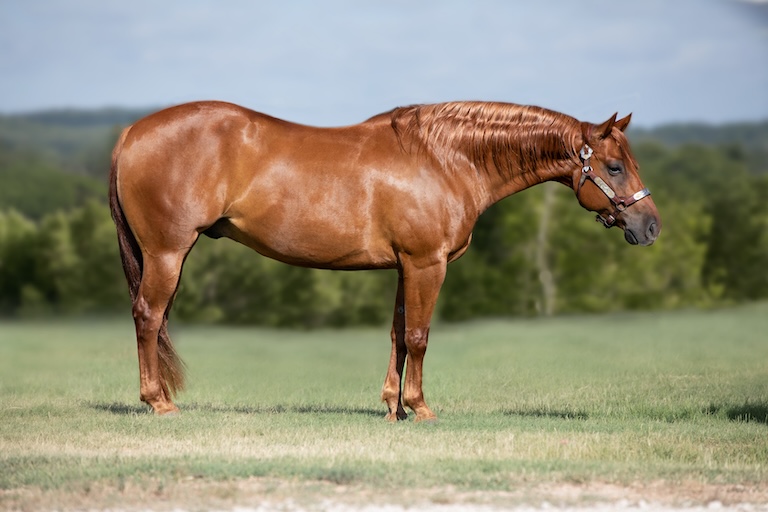
Quarter Horse Facts Overview
| Habitat: | Grasslands, farms, ranches |
| Location: | Worldwide (origin: USA) |
| Lifespan: | Up to 30 years |
| Size: | Up to 1.73 m at the shoulder (5.7 ft) |
| Weight: | Up to 590 kg (1,300 lb) |
| Colour: | Any solid colour; often bay, chestnut |
| Diet: | Grasses, hay, grains |
| Predators: | None (domestic) |
| Top Speed: | Up to 71.44 km/h (44.4 mph) |
| No. of Species: | 1 (breed) |
| Conservation Status: | Not Listed |
Like Cate Blanchett to a straight woman, the American Quarter horse is well worth reconsidering, even if you’re not that into the scene.
This is one of the most impressive horse breeds around today, and not only is it an all-rounder, it actually excels in a range of roles. With influences from the Orient and English Thoroughbreds, this breed mixed with Native American horses and feral mustangs to produce a fast, smart, and incredibly powerful animal that’s growing in popularity all over the world.
Interesting Quarter Horse Facts
1. They’re one of the “other” ungulates
All land vertebrates evolved from a very clever fish that climbed out of the water around 420 million years ago or more. From this fish, we received all birds, cats, badgers, racists and saints. The vast majority of four-legged herbivores today are ungulates, which is a clade of mammals broken into two orders: the even-toed ungulates, which are pretty much all of them, and the odd-toed ungulates, which contain only three groups: the rhinos, the tapirs and the horses.
These are members of the family Equidae, which also include zebras, donkeys and asses, and it’s this group where we find Equus ferus, or the archetypal horse species from which we get all horse breeds.
The Quarter horse, then, is not a species of horse, but a selected breed, man-made, and “intelligently” selected, from an ancestral stock dating back to the 1600s. And they’re doing rather well for themselves, with over three million of them in existence.
2. They’re working animals
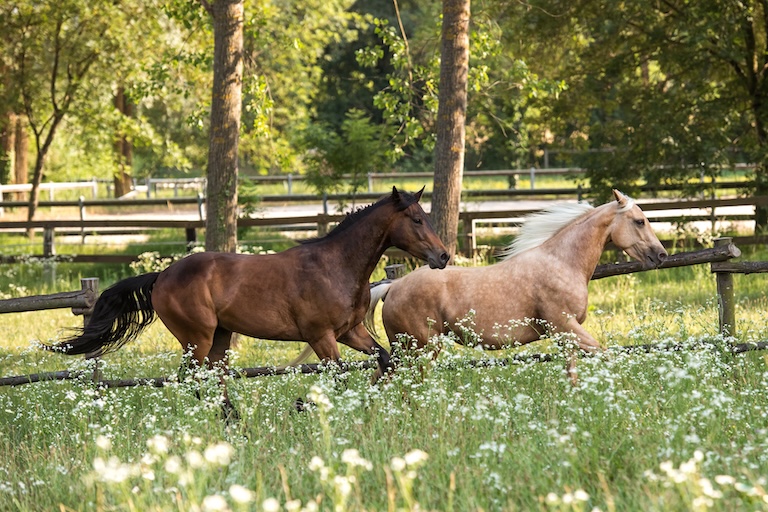
While places like Mongolia owe their very existence to the horse, the human relationship dates back tens, perhaps hundreds of thousands of years longer than the Mongol empire of the 1400s. These are Pleistocene animals, evolved to kick the face off a sabre-toothed tiger and then sprint away, and ever since our species wiped out those threats in the US, horses have more or less done our bidding there, too.
In fact, Eurasian horses evolved in North America and ran over to Europe and Asia later, so their origin is likely North American. But the Quarter Horse was derived from a long-domesticated line of English Thoroughbreds, which themselves stemmed from oriental breeds, finally imported to the US as a working animal. It immediately set to work with local fillies to form a very strong and very fast tool.
Soon after, was prized not only for herding but also for racing, and bred for sprints, but this breed has done a lot of work for colonial America over the generations as a herder and rancher over the plains.
3. They’re also smart
This is, of course, relative. Horses have a hard limit on their intellects similar to that of a Trump voter or someone who doesn’t use their indicator. But with this in mind, quarter horses are renowned for their trainability, and this stems from a boldness and a level of attention that other breeds may struggle with.
Because of this, not only is this breed great at running and herding, but they can be used for rodeo, trail riding, even dressage and showing.
4. They’ve bred with mustangs
As the breed moved west with the European colonists, it came upon domestic breeds of the native Americans, as well as feral mustang populations, and so it crossed with these local breeds and apparently achieved even greater heights of enlightenment.
It’s said that from these local genes, the American Quarter Horse gained a powerful “cow sense” and became popular among the ranchers as a way of looking after their herds as a result. 1
5. And they’re lightning fast
Horses are built for running; that’s why their legs are so stiff, and they have no fingers.
But some breeds are clearly faster than others, and the American Quarter Horse is at the top of the ranks. An American Thoroughbred, Winning Brew, holds the Guinness’ recorded fastest sprint for a horse, at 70.76 km/h. This reflects the general rule that thoroughbreds are the fastest horse breed, but American Quarter Horses are seriously competitive for that title.
Some go as far as to say that Quarter Horses consistently average higher speeds than the Thoroughbreds, and there are lots of claims that this breed has hit 88 km/h, though these appear to be unsubstantiated. Regardless of the specific numbers, these are outstanding sprinters, and their very name alludes to this: they got their reputation for their speed over a quarter mile. The fastest quarter horse on record (that we know of) hit 71.44 km/h over around 400 metres, which is even faster than Winning Brew’s entry in the Guinness Book of Records. 2
6. They’re still dominant
This breed has such a vigorous accumulation of good genetics that the modern breed, as described by the American Quarter Horse Association, still dominates in a range of competitive tasks.
It remains one of the most versatile breeds of horse in the world, strong as a racer, a cutter, and a pleasure horse, among many other roles. They do well as show jumpers or sprinters, and have been exported all over the world; they’re now on the rise in Europe, Australia, and the UK as well.
This is now the breed with the largest register of any horse, and has a population of over 3 million, as of 2014 – likely still growing. 3
Quarter Horse Fact-File Summary
Scientific Classification
| Kingdom | Animalia |
| Phylum | Chordata |
| Class | Mammalia |
| Order | Perissodactyla |
| Family | Equidae |
| Genus | Equus |
| Species | ferus |
Fact Sources & References
- Equine Network, “The Making of A Masterpiece Cow Sense and Fleet Feet”,YouTube.
- , “Racing World Records”, AQHA.
- (2014), “HORSE Statistics”, Internet Archive.