
Queenfish Profile
Despite being our ancestral home, the ocean retains more mystery than any other biome on our planet. In many ways, this is reflected by our lack of rigour in naming its inhabitants and our insurmountable bias towards those species that taste good or are fun to catch.
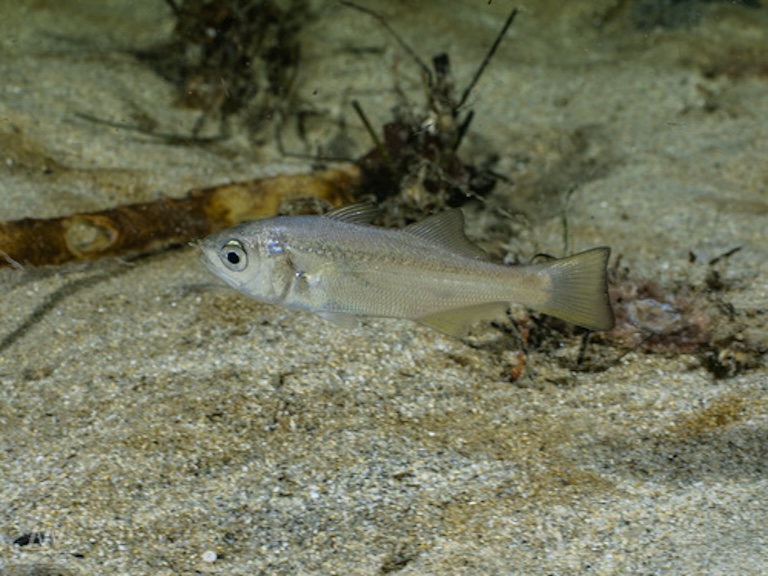
And this is exactly how we ended up with multiple queens! Queenfish is the name given to multiple species, but most of them fit within two unrelated genera. On the left, we have the tropical, dazzling silvery sport fishes, and on the right, we have a much smaller, quieter intellectual. Two contrasting approaches to monarchy, both with their strengths and weaknesses.
Queenfish Facts Overview
| Habitat: | Coastal marine |
| Location: | Pacific and Indian Oceans |
| Lifespan: | Unknown |
| Size: | Up to 120 centimetres (47 in), or 30 cm (12 in) in the Eastern Pacific species |
| Weight: | Up to 7 kg (15 lb) |
| Colour: | Silvery |
| Diet: | Shrimps, worms, fish, cephalopods |
| Predators: | Larger fish, humans |
| Top Speed: | Unknown |
| No. of Species: | Two unrelated genera, six species in total |
| Conservation Status: | All are Least Concern |
Thankfully, for the sake of simplicity, these completely unrelated fish groups have a lot in common. They’re both coastal (mostly), they’re both silvery, and they are both edible. They differ in size, weaponry, and (as far as we currently know) the ability to talk.
Tropical queenfish are large, fast, and bright fish, while their temperate namesake is much smaller and slips under the radar.
Interesting Queenfish Facts
1. There are two main types
As is so often the case with common names, this one is attributed by different people to different animals, but there are two groupings that encapsulate the majority of so-called Queenfish.
One is a small, North American croaker: a 30 cm, shallow water silvery job that occupies the shoreline of the Eastern Pacific from California to British Columbia.
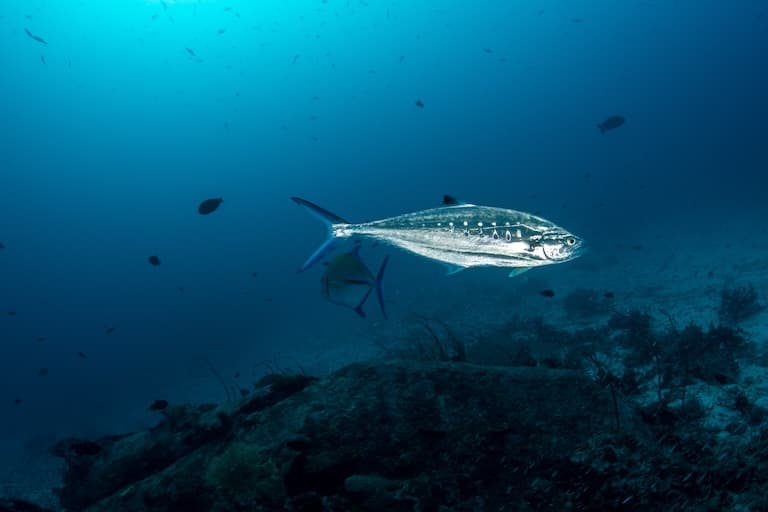
The other is a whole genus of fish from the opposite end of the world, called Scomberoides, which has in it all the “tropical” queenfishes. These are from the Western Pacific and Indian Ocean, mostly, and are quite unrelated, sharing nothing much in the evolutionary history of their temperate, Eastern namesakes.
There are only five species in this latter tropical group, and only one in the former, so it’s not easy to get them confused with one another. One quite exciting difference is that the tropical ones can sting.
2. They’re venomous
Both the dorsal and anal fins on the Scomberoides species have spines attached, and these are said to be venomous.
There isn’t a lot of fuss made about this venom, and not a huge amount of literature on it, so presumably it’s mostly just uncomfortable, or it managed to kill everyone who ever encountered it, along with all the witnesses.
Either way, it’s best to avoid the spines on these fish, as you may get a nasty burning pain at the very least.
The smaller, Eastern Pacific genus has only one fish in it, and this is a tiny croaker called Seriphus politus. As the name suggests, it doesn’t sting and always says thank you. Not all queenfish are as well-received.
3. Some are aggressive
Calling a sport fish aggressive for fighting back reads a lot like telling someone to “calm down” while you operate on them without anaesthetic. Nonetheless, the popular tropical queenfishes are well known for putting up a fight.
They do this, of course, to try and save themselves from being dragged out of their home by their faces. A bit more on that shortly.
4. They have different feeding styles
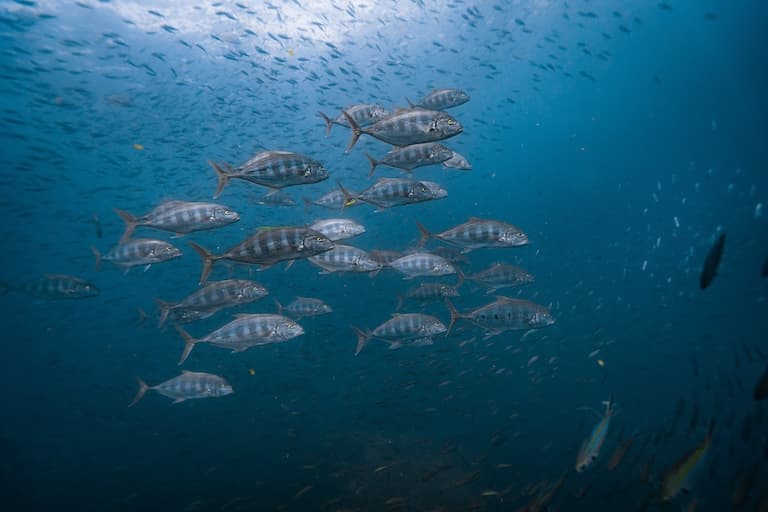
The smaller, humbler Eastern Pacific queenfish is a krill eater, mostly. Sometimes worms, sometimes other fish if they’re small enough. But the far larger tropical queenfishes are much higher up the predatory ladder and will hunt down pretty much any other fish they can catch.
Even their juveniles are scary and carry that high-ranking predator attitude long before they have the mass to back it up with. These baby queenfish will instead attack and scrape off the scales of other, larger fish like creepy little parasitic weirdos until they’re large enough to kill for themselves.
This tropical group is far larger in general, and while both are coastal fish, the tropical queenfish can afford to spend more time away from the coast and hunt in the pelagic zones.
5. They’re popular to eat
The North American queenfish, the small, temperate Seriphus politus, is edible and primarily harvested by subsistence fishermen, but will also be found in local markets.
The tropical Scomberoides species are caught by commercial, subsistence and sport fishermen, and so are really quite popular on all fronts.
As a target of the sport, they’re prized for their pull, ability to leap, and bursts of speed, and will commonly show up in fish markets around Australian coasts too1.
6. Some can talk
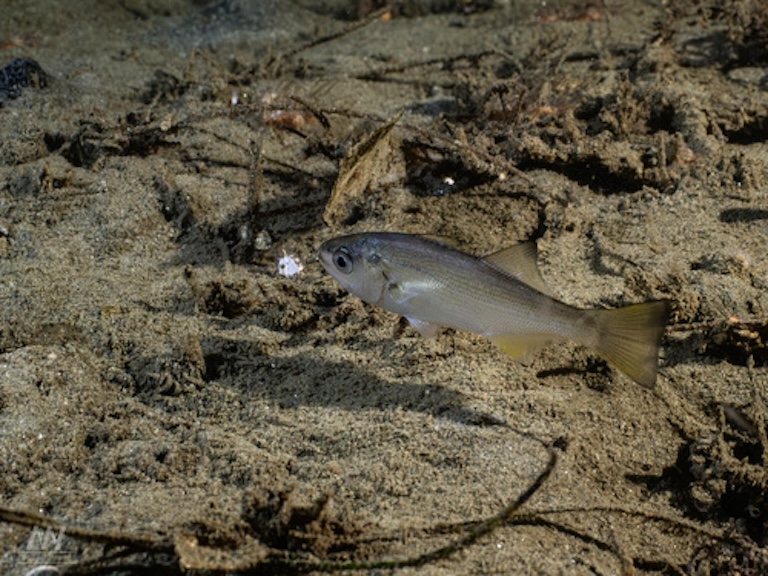
The dainty and humble Seriphus politus, the single species in the genus and smallest of the so-called queenfish, is a member of a group of fish called croakers.
This group is the family Sciaenidae, and is also known as the drummers, for the same reason. These fish are known to produce sounds, which were, for a long time, shrugged off as a novelty side-effect of pulling them out of the water.
But animal behaviourists are now rapidly exposing the hidden world of fish, and with that, their ability to communicate with one another. What they’re finding is that fish, like most other animals we’re familiar with, make noises with intent.
Croakers and drummers are just two groups that do this, but it’s remarkably common in the ocean, and a bit of a frontier of research for marine biologists, as our species had, historically, assumed fish were as expressionless as their faces suggest2.
The great news is, that despite their popularity as food and sport fish, all species of Queenfish are listed as of Least Concern by the IUCN.
Animal Fact-File Summary
Scientific Classification
| Kingdom | Animalia |
| Phylum | Chordata |
| Class | Actinopterygii |
| Order | Acanthuriformes/Carangiformes |
| Family | Sciaenidae/Carangidae |
| Genus | Seriphus/ Scomberoides |
| Species | 6 species |
Fact Sources & References
- Author Name (2026), “Queenfish”, Western Angler.
- Frankie (2024), “Boops, hums and farts: The mysterious world of fish communication”, BBC.