
Seal Profile
Carnivorans are the dominant clade of terrestrial predators, but the vast majority of the ocean still belongs to sharks. Of the mammals, only two species have made it to apex predator positions: the infamous orca and an often-overlooked monster pinniped from Antarctica. This killer has family ties with both weasels and walruses, and belongs to an amazing group of animals that look as cute as a kiss from a rose, but smell worse than a padded sell: it’s the seals.
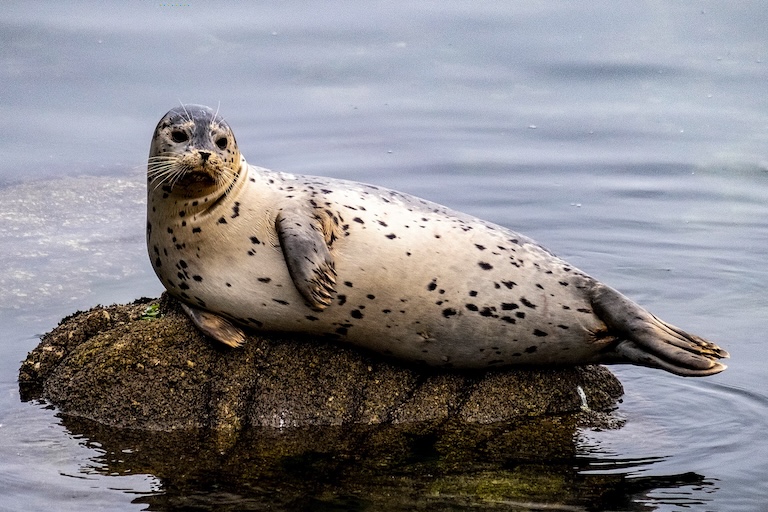
Seal Facts Overview
| Habitat: | Marine, coastal |
| Location: | Worldwide |
| Lifespan: | 40 to 50 years in some species |
| Size: | From around 1 metre up to 6.85 m long |
| Weight: | 45 kg to 4,000 kg |
| Colour: | Varied, usually greys and browns |
| Diet: | Fish, cephalopods, krill, mammals |
| Predators: | Sharks, orcas, humans |
| Top Speed: | Possibly up to 20 km/h |
| No. of Species: | 34 |
| Conservation Status: | Several species are endangered |
Many seals are painfully cute! But others are conspicuously ugly. All are expert swimmers and masterful acrobats. They have to be – they are almost all food for sharks and cetaceans. So, a combination of smarts and agility keeps them safe.
Seals are found all over the world, and range from the cute little ice-hoppers to the giant apex predators known as leopard seals. Unfortunately, we have done what humans do, and multiple species are now in need of urgent conservation.
Interesting Seal Facts
1. Eared, earless and walrus
Pinnipeds are the most successful group of marine carnivorans by far, with otters being a distant second, and very little else even in the competition. They are as close to sea dogs as you can get, and like canids, they offer a combination of adorable puppy behaviour and brutal murderous instinct.
And so it might come as little surprise that their closest carnivoran relatives are the mustelids, who do both of these things even better than dogs do, and who are equally overlooked when it comes to talking about epic predators.
Seals are technically semi-aquatic, but many touch land only when it’s time to breed, and are comfortable spending the rest of their long lives in the ocean.
Pinnipeds appear to have evolved sometime in the Eocene, which is around the time the ancestors of modern cetaceans did, too.
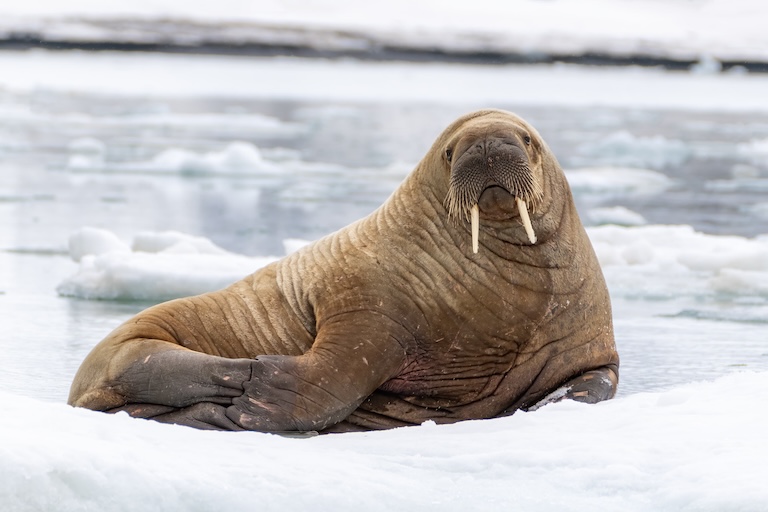
There are three major groups, once considered of two separate lines, but now thought to share a common proto-seal ancestor. These are the eared seals, the earless seals, and the walrus, which is a single species of very specialised pinniped. There are 34 species in total, and they are perhaps more diverse than you might think.
2. They’re rubbish out of the water
Seals need to breed on land, or at least solid substrate – many breed on the frozen sea ice in the Arctic. Most breed annually, and often in enormous groups to help protect them in their most vulnerable state. Many species are very long-lived, often 20+ years, and return to the same breeding grounds for the duration.
They are intelligent, social, and exhibit extended parental care, but they are such lumbering trainwrecks on land, it’s hard to imagine what you’re looking at is actually a high-tier oceanic predator.
3. But incredible when in it
Once a seal hits the water, though, it’s quite obvious they’re in their element. Seals are rarely at the top of the food chain out there, though, and survive using incredible agility over speed, which helps them leap out of the water, change direction fast, and hopefully escape predation from the much larger sharks and orcas that tend to hunt them.
In South Africa, seals have even been documented mobbing clusters of great whites to chase them off, using this superior agility to stay away from the sharp end.
Seals may look soft and cuddly, but they have mustelid skulls and tremendous bites. And they have killed before.
4. They’re top predators
Around Antarctica, there are monsters. For such a hostile place to human life, Antarctic waters are some of the richest, starting with the unique mites on the rocks and the krill in the water, all the way through penguins and into the apex predator of the coastlines: a seal.
A leopard seal, to be precise, and this animal is as deadly as it is handsome. It is the second-largest species of seal, reaching up to 3.5 metres long and over 600 kg. This is the size of a polar bear, only faster, more muscular, and with big old puppy dog eyes.
Leopard seals are an often-overlooked animal when it comes to sleek and powerful predators, and could make very short work of, say, an intrepid NatGeo diver. But for some reason, they don’t appear interested in eating humans (this is likely because we smell as bad to seals as they do to us).
That is, on most occasions. In 2003, a marine biologist drowned by a leopard seal while snorkelling on an expedition around Antarctica.
5. And fat suckers
Walruses are not nearly as likely to drown a person, though you wouldn’t want to approach one. These chunky beasts are the only species in the third family of seals, and are remarkably different to all other seals, in that they have huge tusks.
They can also dive to remarkable depths – up to 500 metres, possibly even deeper! They do this while hunting for molluscs and crustaceans to suck up, and they have incredible adaptations to both the pressures of the deep and the frigid cold of the Arctic. They can also be truly massive, at up to 2 tonnes. Yet, the largest seals can be twice this weight.
6. They can be enormous
The name elephant seal is only a slight exaggeration. The largest seal species is one of the largest animals on the planet, with record weights of up to 4 tonnes, and almost seven metres long.
These beach behemoths are as impressive as they are ugly, and are well known for the blubbery appendages the males carry on their faces. Females are substantially smaller, but still incredibly dangerous, and should not be approached.
7. They’ve been persecuted
Seal clubbing is up there as one of those acts with the highest cuteness-to-brutality ratio, alongside what they do to all the male chicks in the egg industry.
Despite being a quick and painful death, clubbing a seal just goes against all our instincts, and so it was a big deal in the ‘80s, mostly because the majority of us weren’t invested in eating seals and couldn’t afford the fur.
But even disregarding the hypocrisy of it all, the threat of extinction is real. The relentless massacre of the adorable arctic species – the hooded and harp seals – led to worryingly low population levels, and even now, the hooded seal is in decline and Endangered. The Harp seal is doing better, and is considered Near Threatened, but other species are at risk all over the world, too. The Caspian seal, in Central Asia; the Galapagos sea lion; and the New Zealand sea lion, to name a few, are all on the Endangered list, and commercial sealing is at the top of the list of threats for most struggling species. 1 2
Seal Fact-File Summary
Scientific Classification
| Kingdom: | Animalia |
| Phylum: | Chordata |
| Class: | Mammalia |
| Order: | Carnivora |
| Family: | 3 families |
Fact Sources & References
- (2014), “New Zealand Sea Lion”, IUCN Red List.
- (2015), “Caspian Seal”, IUCN Red List.